Cathedral of Durango
Our Altars
Explore the different altars that make up the liturgical and artistic richness of the Cathedral of Durango.
Historical Context
The Transformation
of the Altars
The transformation of the altars in the Cathedral of Durango reflects the aesthetic transitions and theological priorities of New Vizcaya. Initially, the space was conceived under a baroque aesthetic that reached its peak with the intervention of masters such as Felipe Ureña and Nicolás de Herrera.
With the arrival of neoclassical ideas, promoted by bishops such as Esteban Lorenzo de Tristán and José Antonio a Zubiría, the interior physiognomy changed radically. It was decided to remove Ureña's "baroque pyramid" to make way for quarry-stone altars, seeking a sobriety aligned with the new times.
Beyond the main structures, the 1822 inventory highlights the richness of the complementary elements that gave life to worship. From the choir stalls to the pulpits and screens brought from Seville, the cathedral functioned as a repository of global art, where the altar was the center of a liturgical staging designed to dazzle and elevate the spirit.
3D Experience
Interior Tour
Freely explore the altars, chapels, and points of interest along the central nave of the Cathedral of Durango. Discover the architectural details and the history behind each interactive altarpiece through this comprehensive virtual experience.
Explore Altars
Main Altar
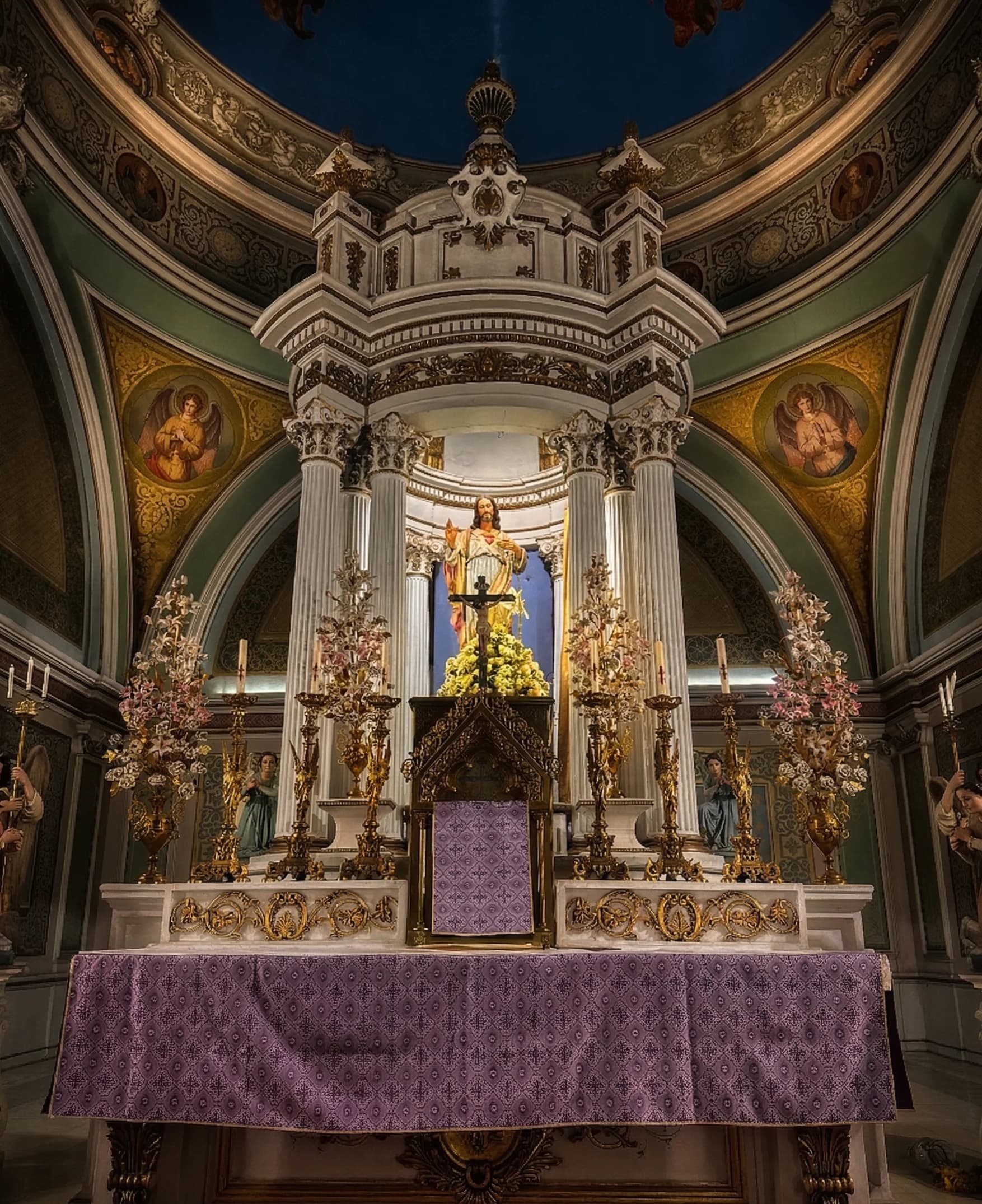
Visual and symbolic axis of the Cathedral of Durango, presided over by a majestic 19th-century neoclassical baldachin.
Chapel of the Blessed Sacrament
Former chamber of the Alumbrado. The Sacred Heart presides beneath a neoclassical baldachin of white quarry stone with gilded details.
Altar of Our Lady of Guadalupe
The Guadalupan origin of Durango
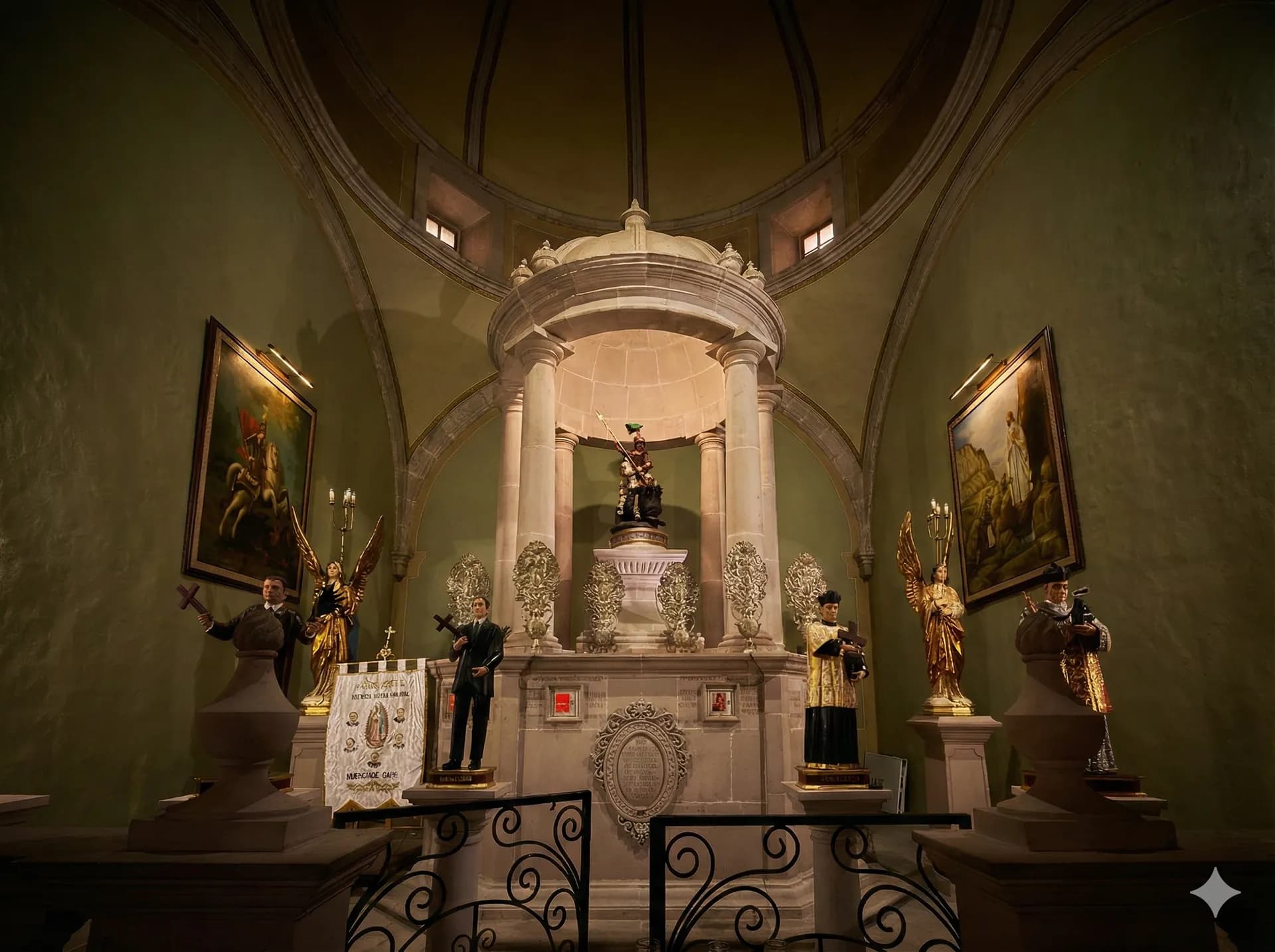
Altar of Saint George
The Cult and Iconography of Saint George in the Cathedral of Durango: History, Art, and Liturgy
Altar of Saint John of Nepomuk
Patron of the Canons and the Ecclesiastical Chapter
Altar of Saints Peter and Paul
Pillars of the Christian faith. This twin altarpiece reflects the purity of neoclassical quarry-stone architecture.
Altar of Saint Joseph of Nazareth
A Montañesine-Sevillian sculpture, patron of New Spain
Altar of SAINT MATTHEW
Historic guardian of Durango's sacred ground
Altar of Divine Providence
Patron of the Archdiocese of Durango
Altar of Our Lady of the Rosary
A prayer written in stone
Altar of Our Lady of Sorrows of Soriano
Intercessor in difficult causes