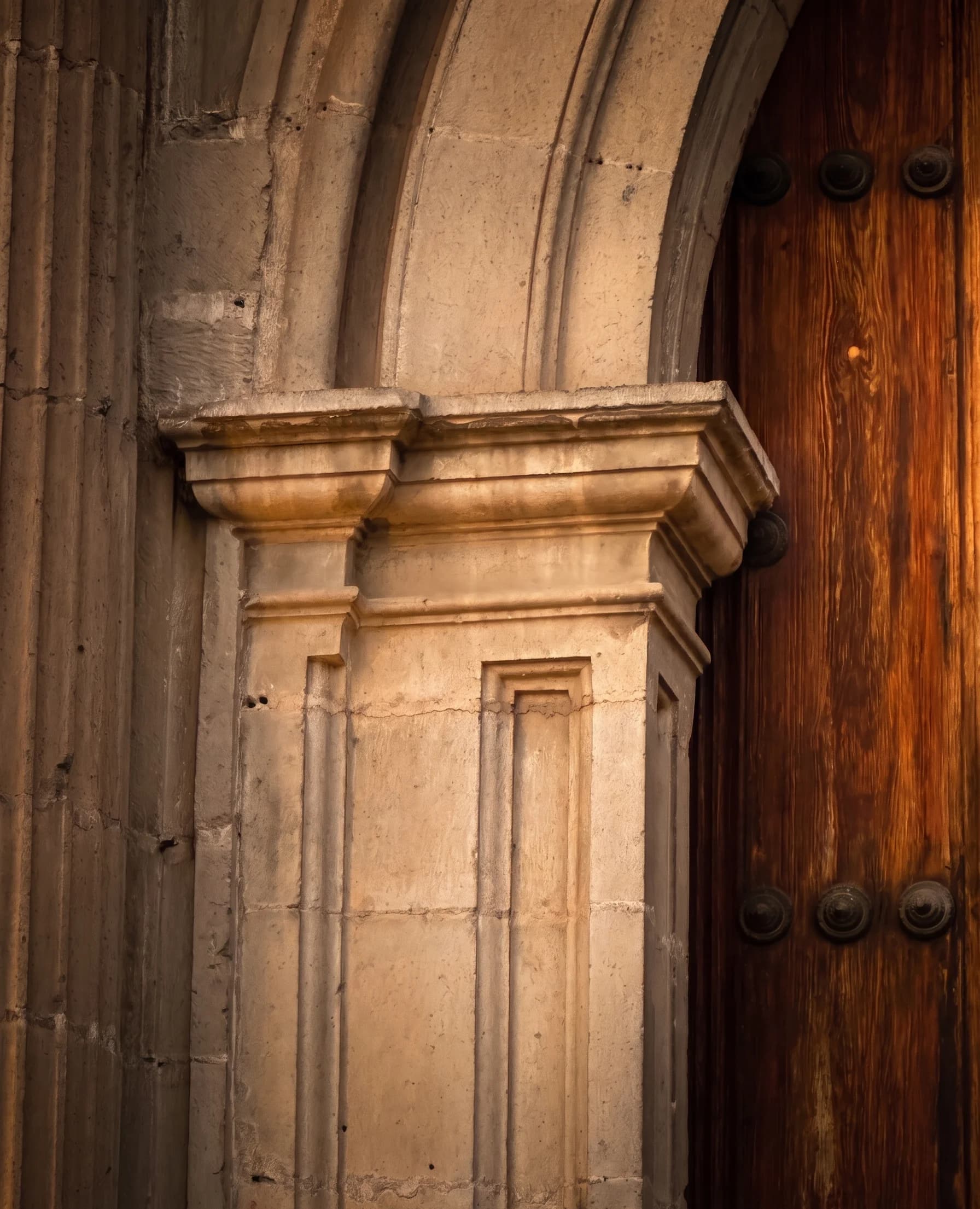
MAIN FAÇADE — Catedral Basílica de Durango
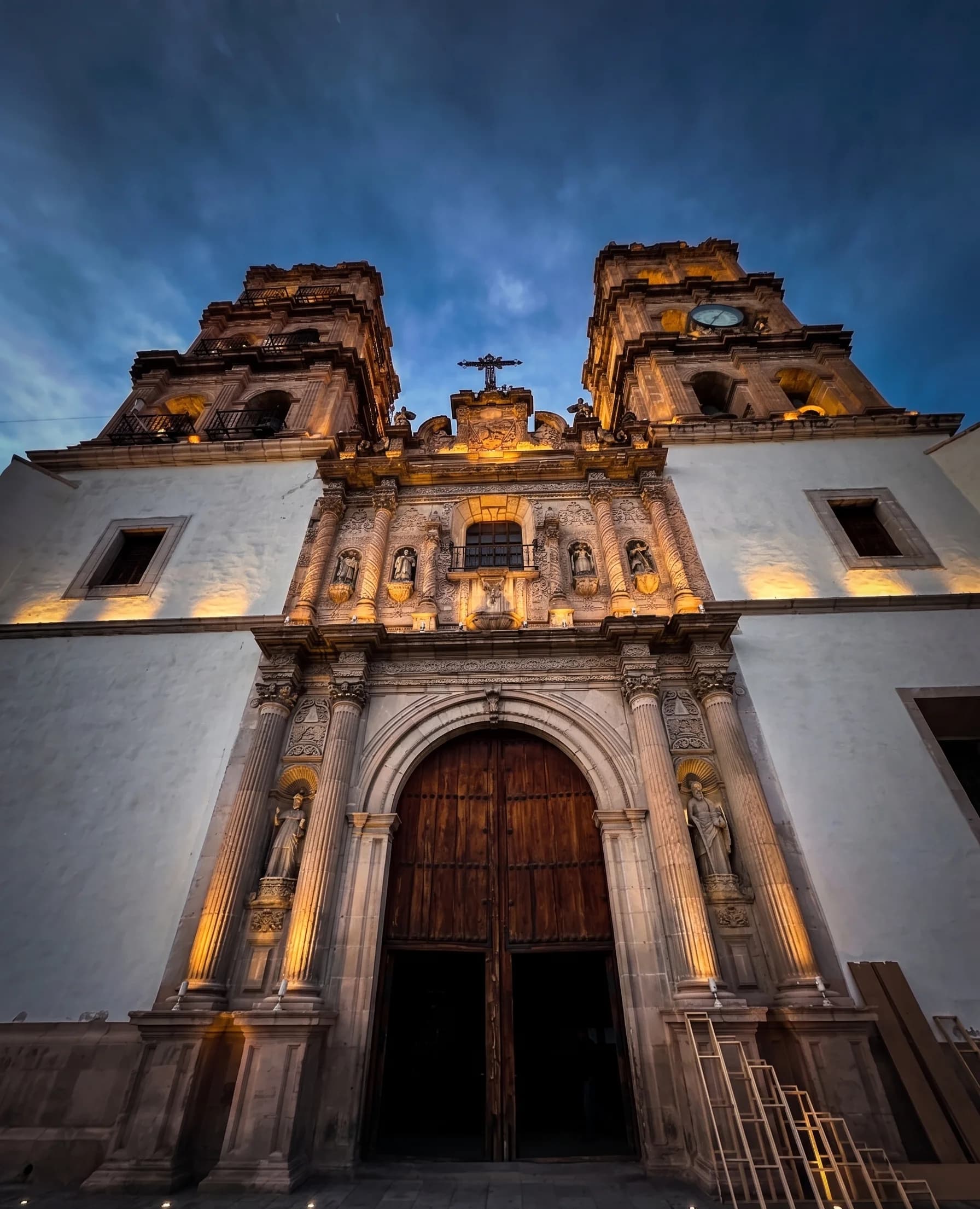
Stone, history, and the living memory of a people
the tour
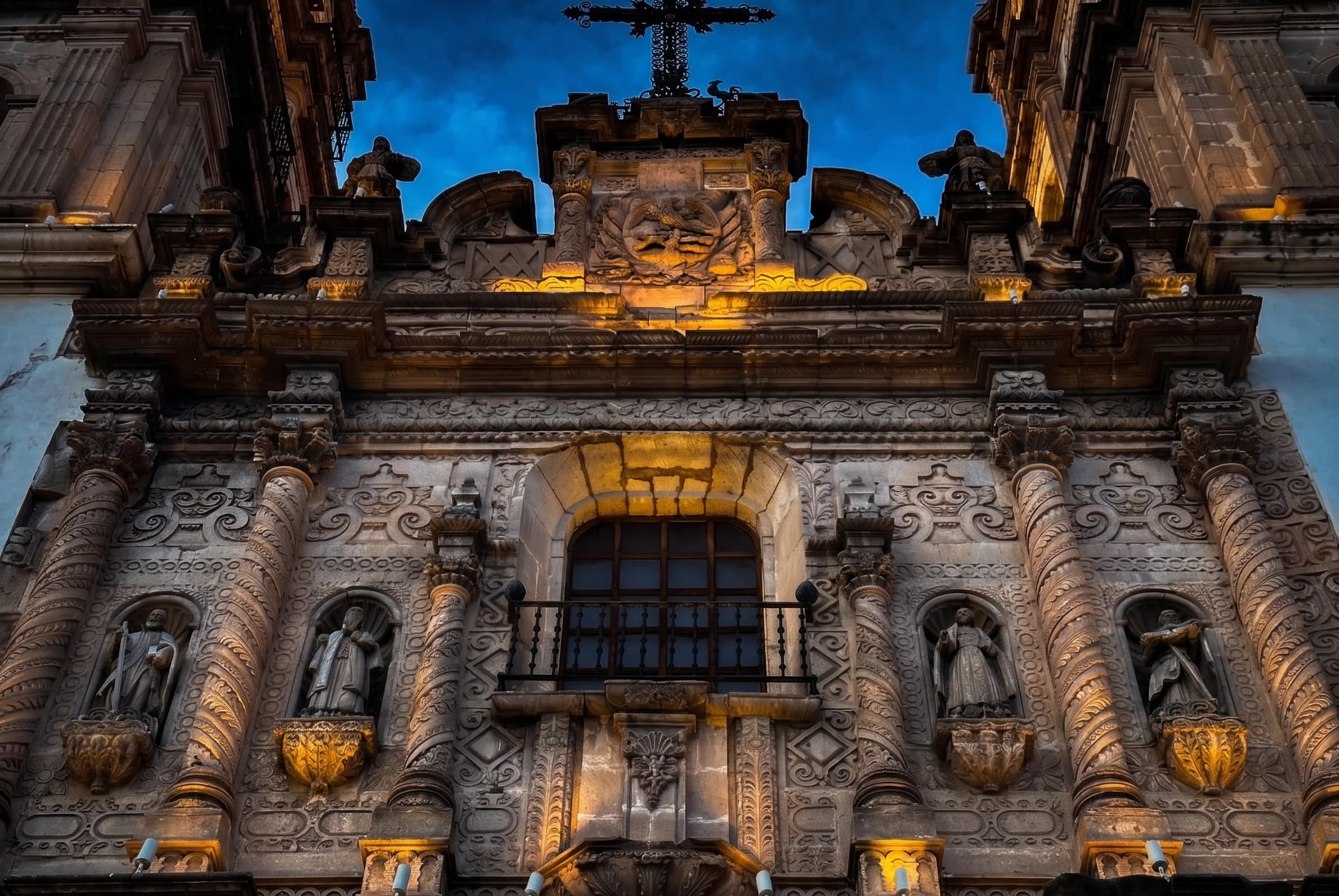
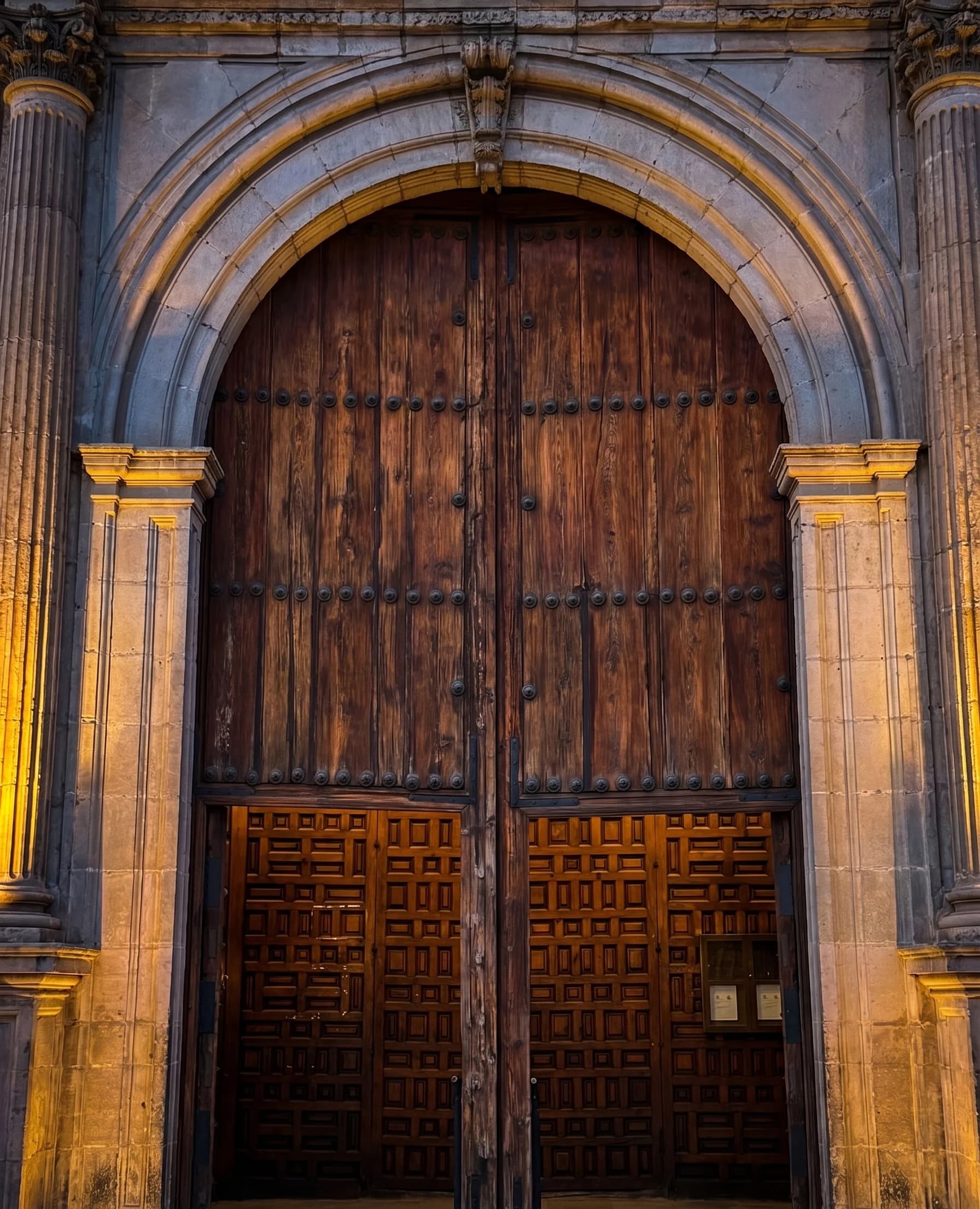
MAINFAÇADEHoly Door · 1692–1821
Stone, history, and the living memory of a people
From Parish to Cathedral
Antonio de Espinoza · 1570
The origin of the building dates to 1570, with the modest parish of Saint Matthew erected by Antonio de Espinoza. Adversity marked its history: elevated to a cathedral in 1620, a fire on the eve of Corpus Christi (1634) and a devastating lightning strike (1682) compelled the builders to rethink the structure from its foundations.
This reconstruction process, formally initiated in 1692 under the direction of Mateo Núñez and Simón de los Santos, defined the internal spatiality we admire today: elevated pillars and groin vaults that give the building its monumental character.
Convergence of Hands and Styles
Curatorial text: Museum of the Cathedral Basilica of Durango · Archdiocese of Durango
Historical research: Historian José Alonso Martínez Barrios
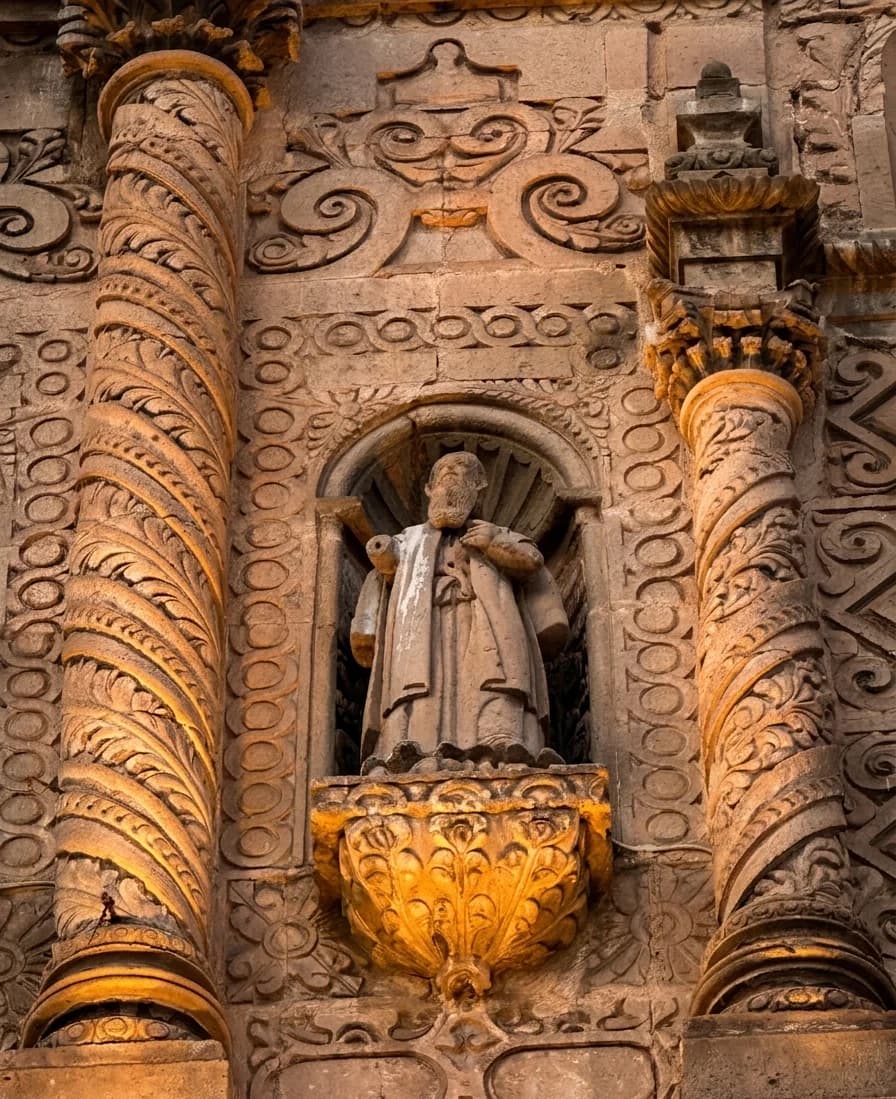
The Second Body and the Crown
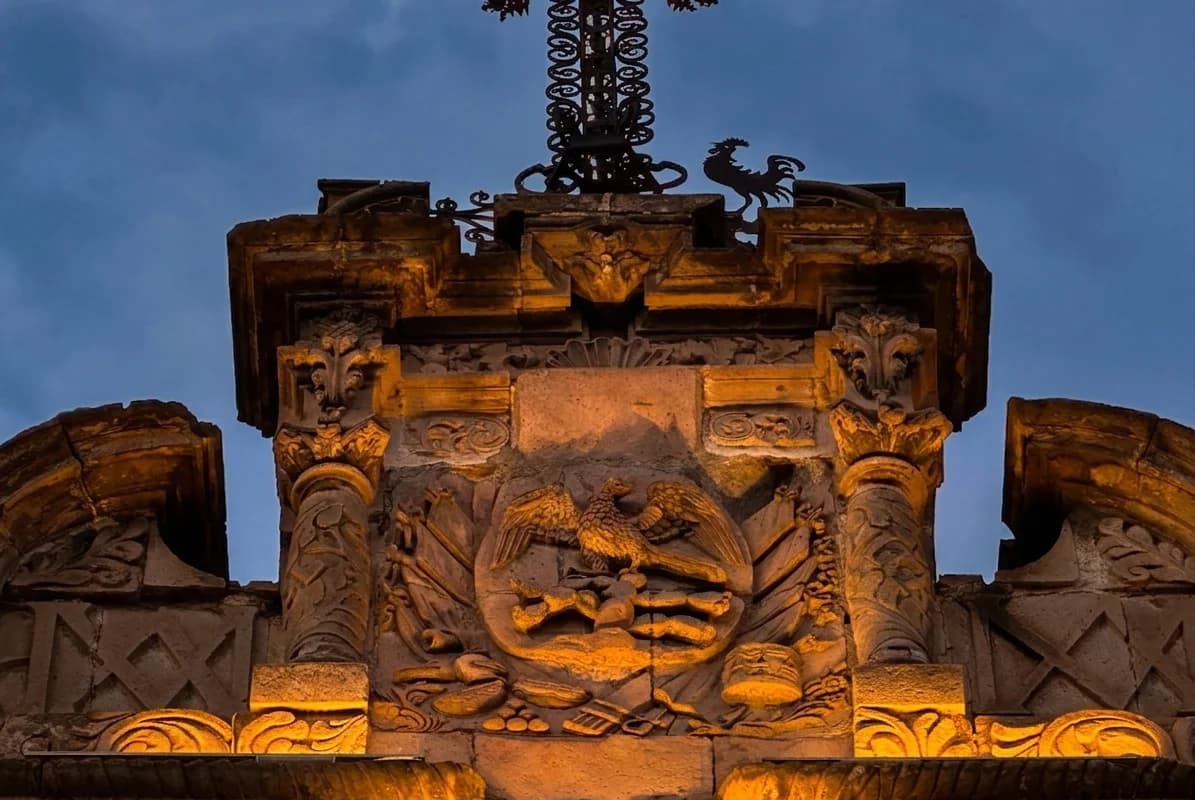
The mixtilinear crown encodes the political memory of the building. In 1821, with the consummation of Independence, the royal coat of arms of Spain was replaced by the republican eagle, transforming the building from a viceregal symbol into an emblem of national sovereignty. A Sevillian ironwork cross with a weather vane and guardian angels crowns the ensemble.
Gallery