Estatua
Our Lady

VIRGIN OF THE ROSARY
A prayer written in stone

View in tour
History and Style

From Wood to Stone

Neoclassical reform in the transept

This apse formerly housed the altar dedicated to the Immaculate Conception, described as a carved wooden altarpiece of profuse elevation. At the center of the altar were crystal-fronted niches with the image of the Immaculate Conception, attributed to sculptor Felipe de Ureña. The image was adorned with jewels, stones, pearls, a silver halo, and pedestal.

This former altarpiece had a variety of wax agnus dei relics, a coral Christ, and an ivory nativity scene. In this same apse there was also a gilded wooden altarpiece with a painting alluding to Saint Athenegenes, patron of widows and orphans.

The Genius of the Master Stonecutters

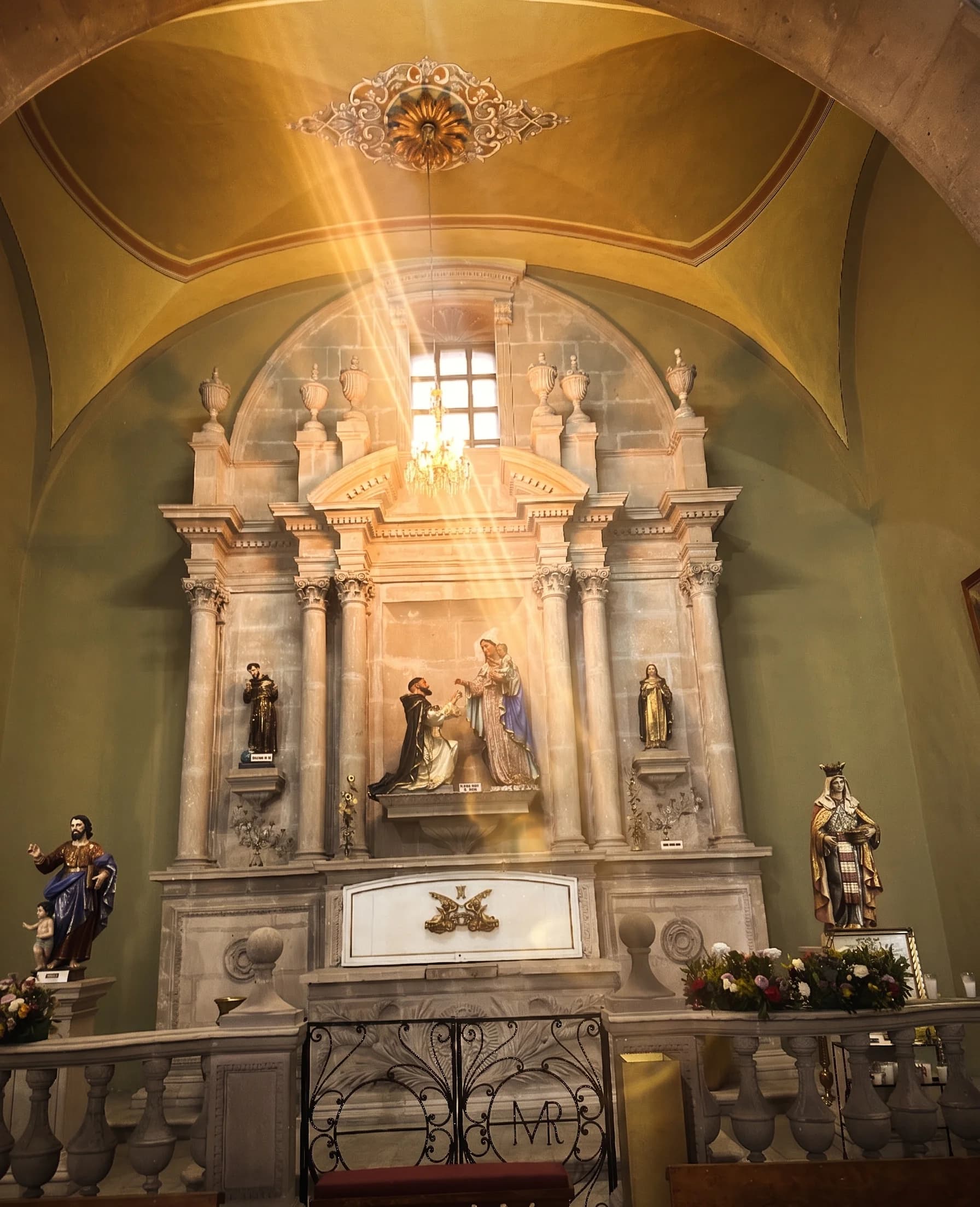
The current Altar of Our Lady of the Rosary stands out as one of the most complex and symbolic pieces. Fruit of the neoclassical reform promoted by Bishop Zubiría y Escalante, this altarpiece is a clear demonstration of the genius of master stonecutters Cristóbal de la Jara and Agapito Medina, who managed to combine devotional tradition with the rational elegance of the 19th century.

Unlike the old wooden altarpieces that filled the temple during the viceregal period, this mid-19th-century work opts for the durability of quarry stone.

Curatorial text: Museum of the Cathedral Basilica of Durango · Archdiocese of Durango

Historical research: Historian José Alonso Martínez Barrios

Imagen introductoria
Sacred Architecture

Anatomy of the Altarpiece

The structure of the altar is a masterful example of an eclectic altarpiece with a marked inclination toward neoclassicism. At the base, the altar carved in quarry stone presents an iconography that prepares the faithful for the encounter with the divine: finely executed palms frame the crowned Marian monogram, reaffirming Mary's position as Queen of Heaven.

Raising the gaze, the altarpiece unfolds in superb order. Six smooth-shafted composite columns rise from the pedestal attached to the wall, creating a structure of three bays and three niches. The choice of smooth-shafted columns seeks to avoid visual saturation and direct attention toward the message of the images. The ensemble plays with an entablature capped by a dentated frieze of great technical precision.
Relics

Saint Placidus: The First Relic

One of the elements that gives this altar exceptional historical significance is the presence of the central aedicule housing the relics of martyr Saint Placidus. These are the first relics to arrive in Durango in the distant 17th century, along with those of Saint Matthew. Their incorporation into a 19th-century neoclassical altarpiece is a temporal bridge uniting the colonial past of New Vizcaya with modernity.

Saint Placidus

Saint Francis of Assisi

Our Lady of the Rosary

Saint Dominic de Guzmán

Saint Rose of Lima

Devotion and Patronage

VIRGIN
OF THE ROSARY
The Central Rosary Group

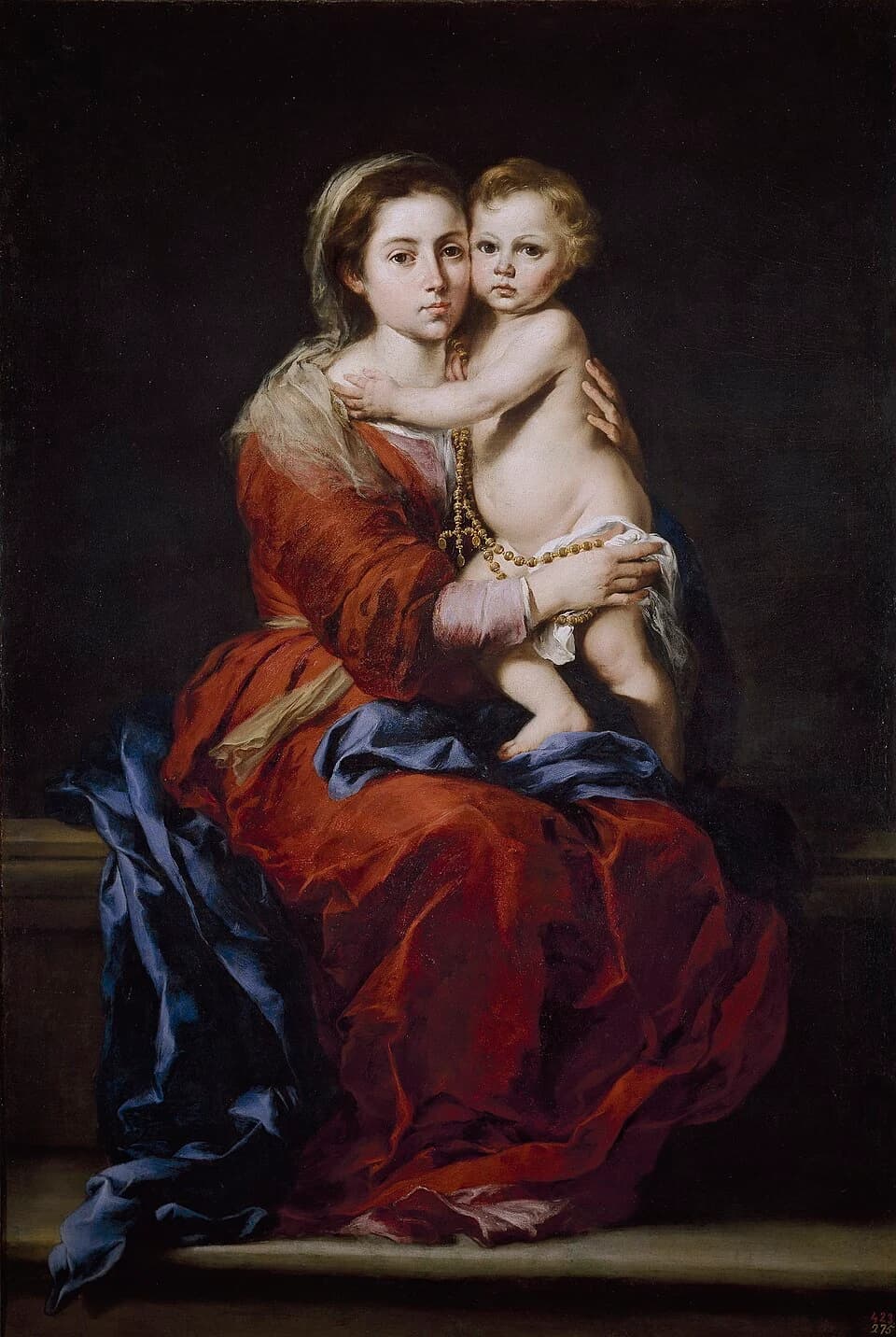
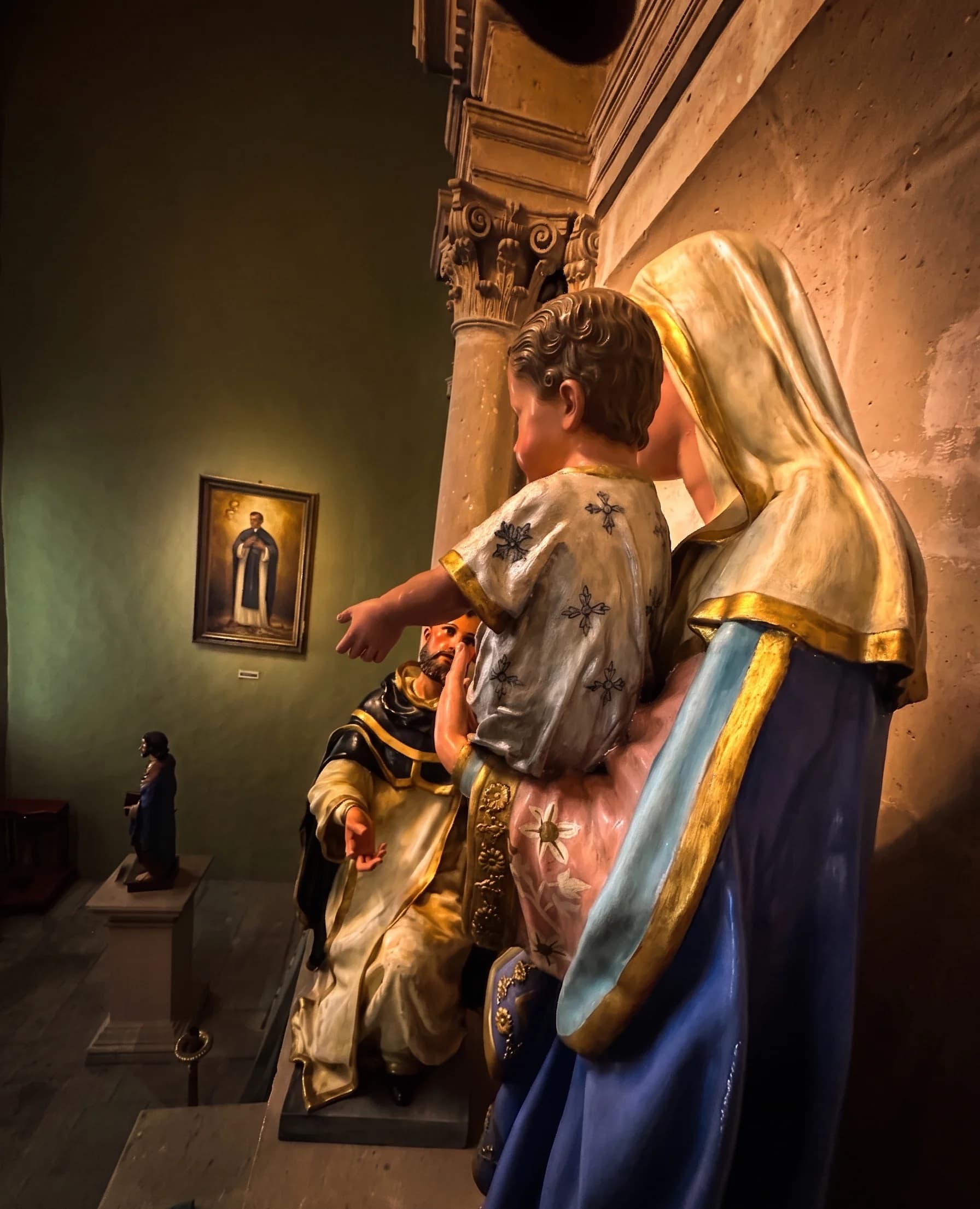
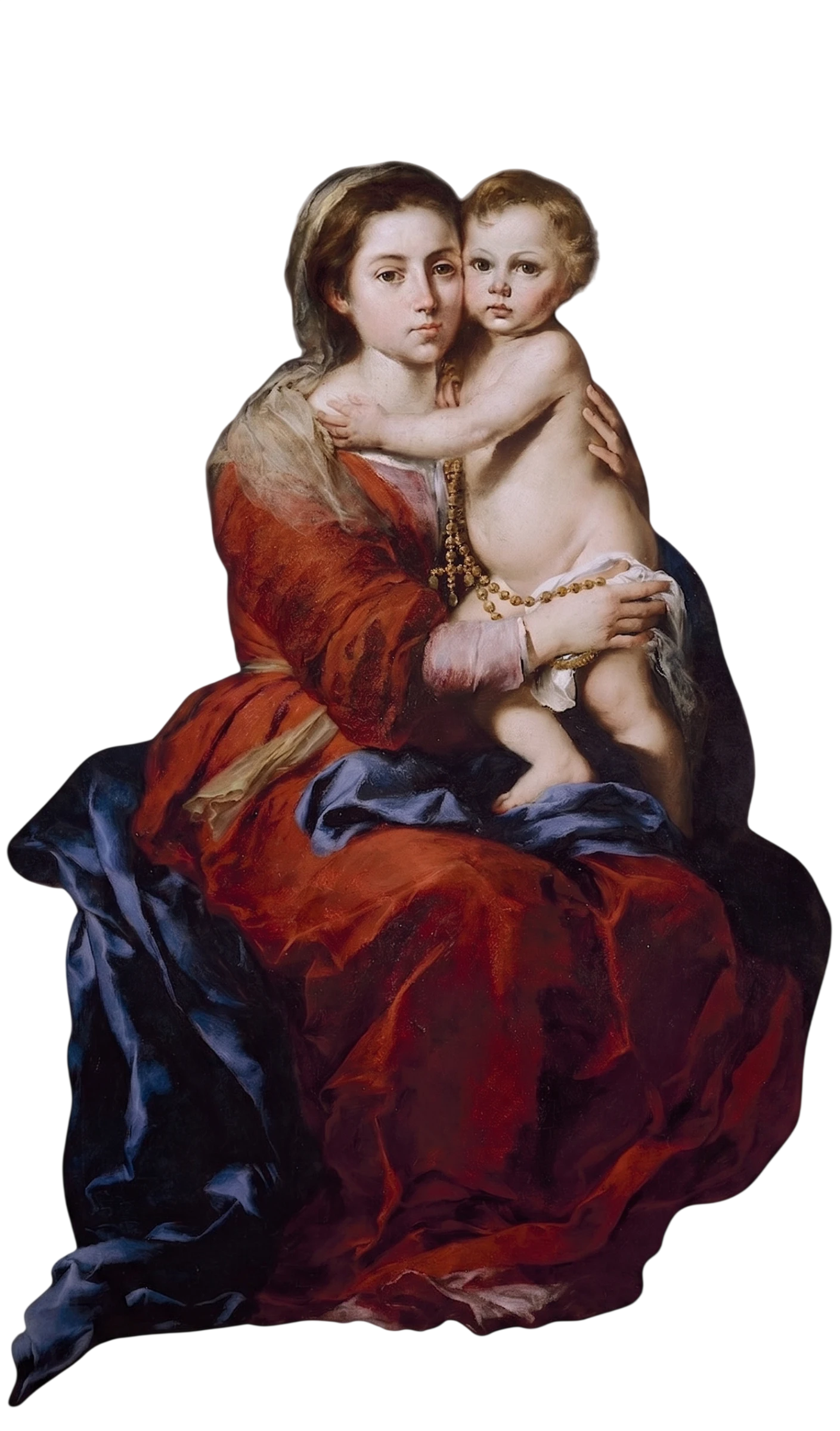
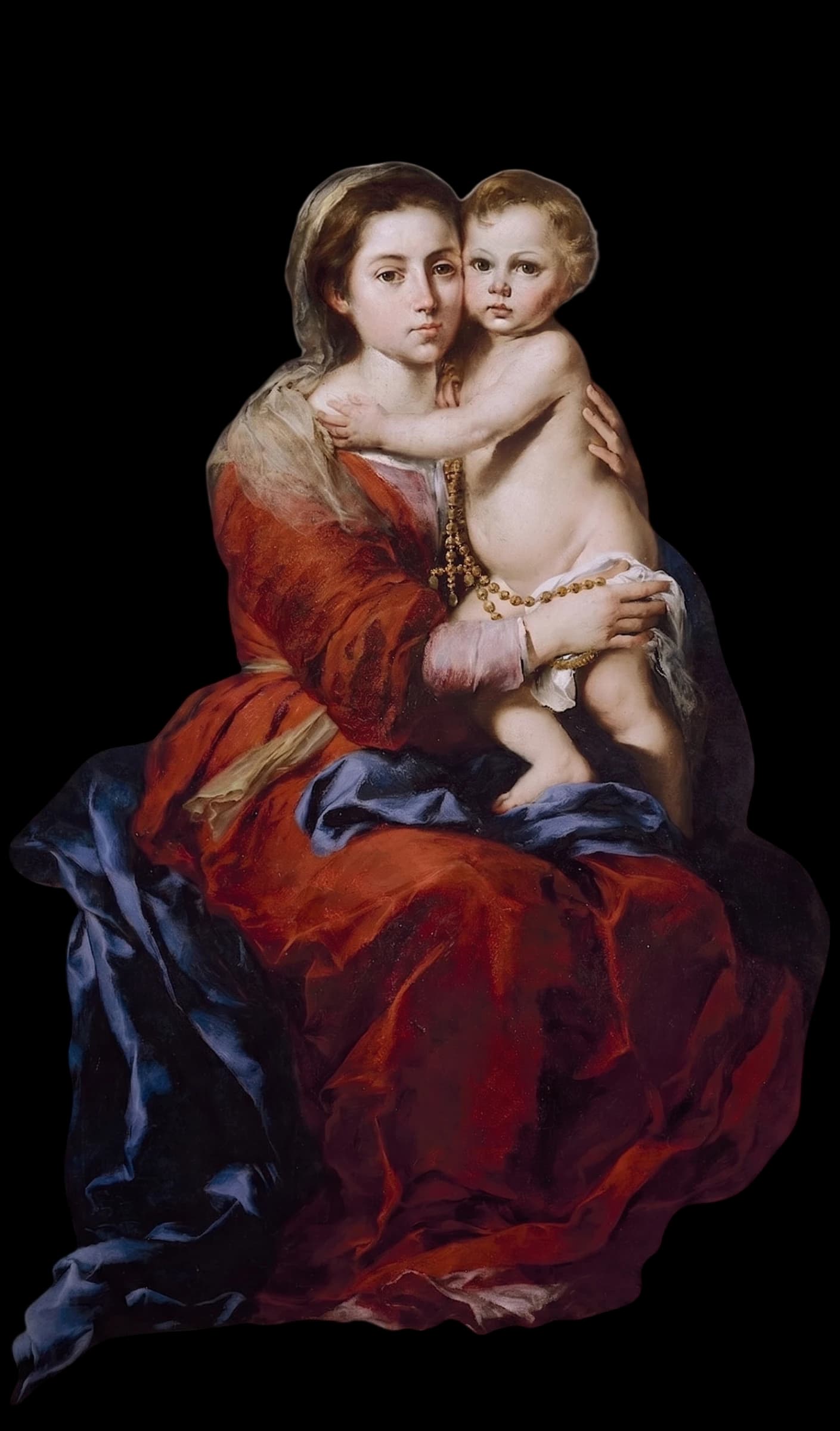
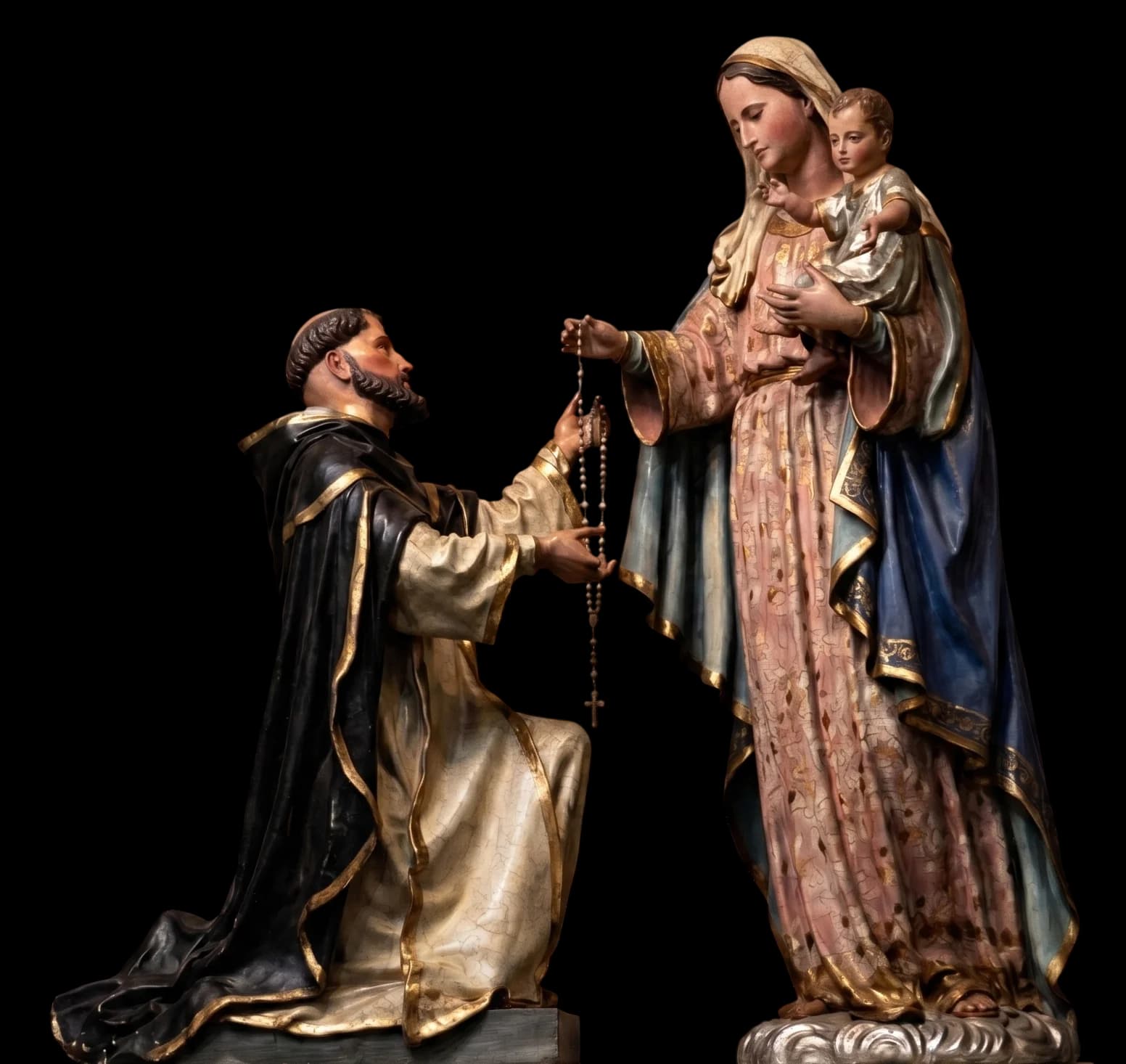
At the center of the neoclassical structure is the main sculptural group: Our Lady of the Rosary presenting the Holy Rosary to Saint Dominic de Guzmán, recalling the origin of this devotion that transformed the spiritual life of Christendom.

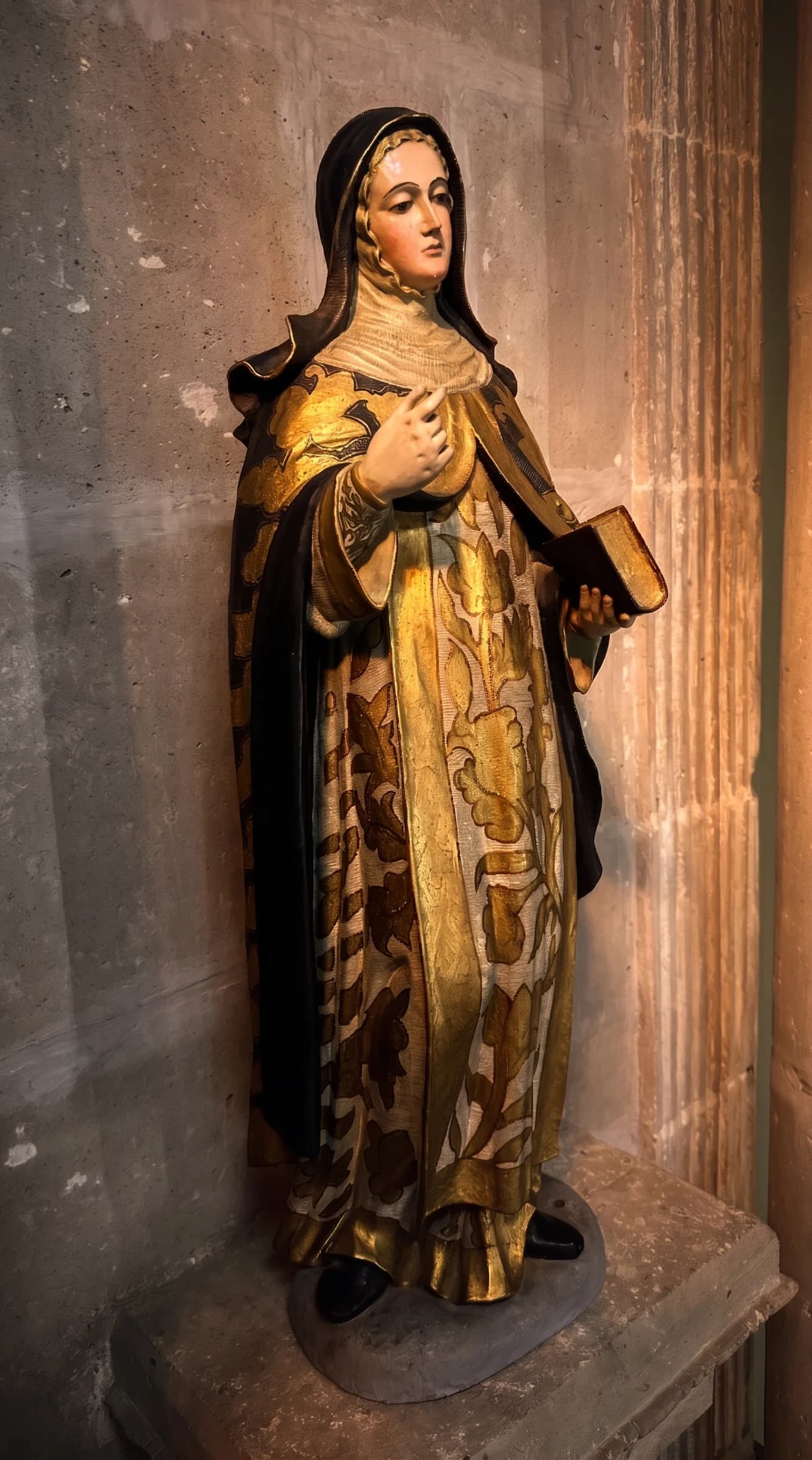
To the left stands the figure of Saint Francis of Assisi, the Seraphic, whose humility serves as a counterpoint to the majesty of the stone. To the right, Saint Rose of Lima, first saint of the Americas, reinforces the identity of the continent and its union with the crown of universal holiness.

VIRGIN OF THE ROSARY

VIRGIN  OF THE ROSARY

Gallery

The Holy Rosary Group
Altar View
Stonecutting Detail
Saint Rose of Lima