Estatua
Altar

SAINTS PETERAND PAUL

Pillars of the Catholic Church

View in tour
History and Style

Symmetry and Permanence

The purity of neoclassicism

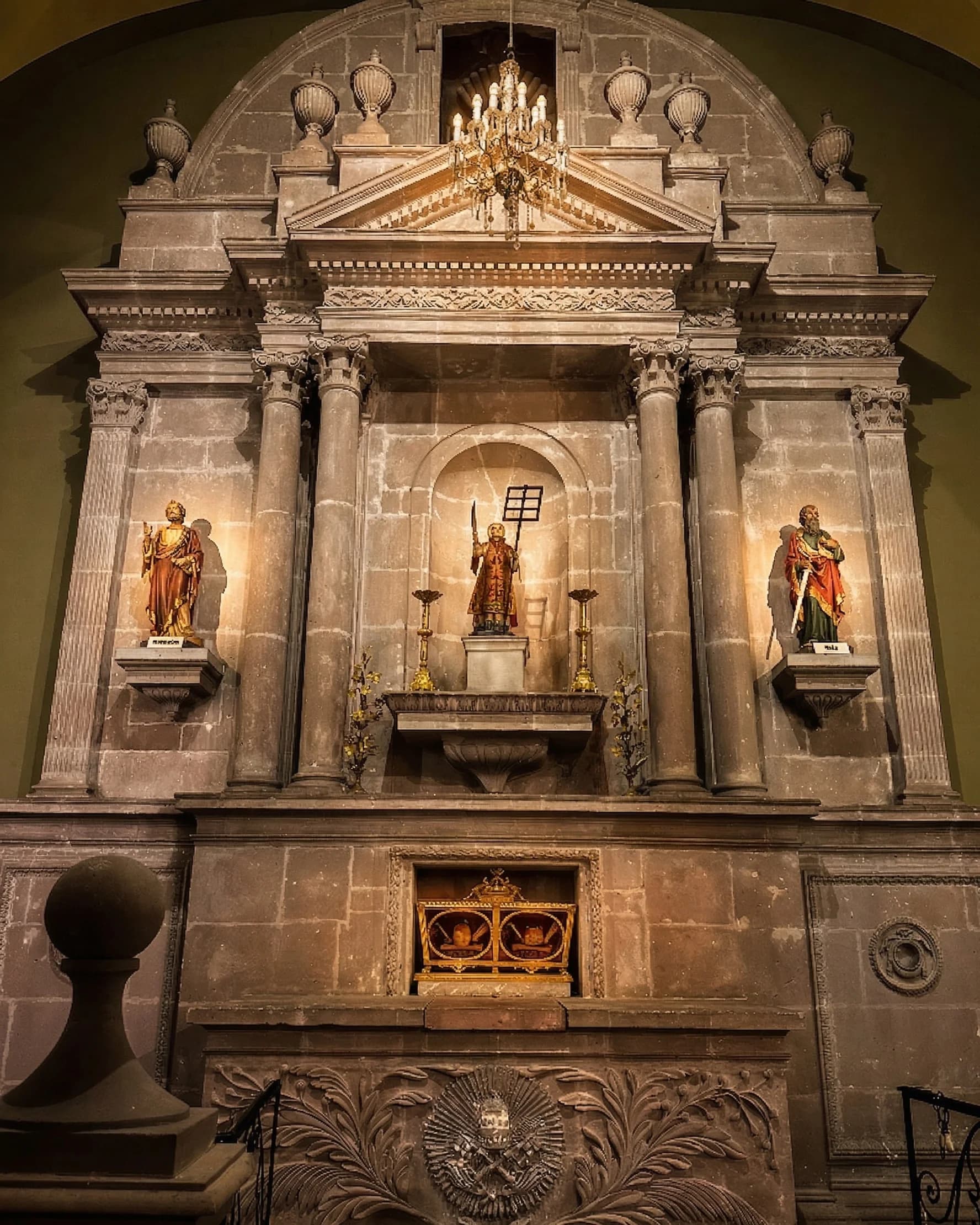
The execution by Cristóbal de la Jara and Agapito Medina is an exercise in technical virtuosity. The altar features an eclectic order in quarry stone, a material that imparts sobriety and eternity to the structure. The design is characterized by fluted pilasters flanking the composition, while at the center free-standing composite columns provide a sense of verticality and lightness that lifts the gaze toward the divine.

The Pontifical Shield

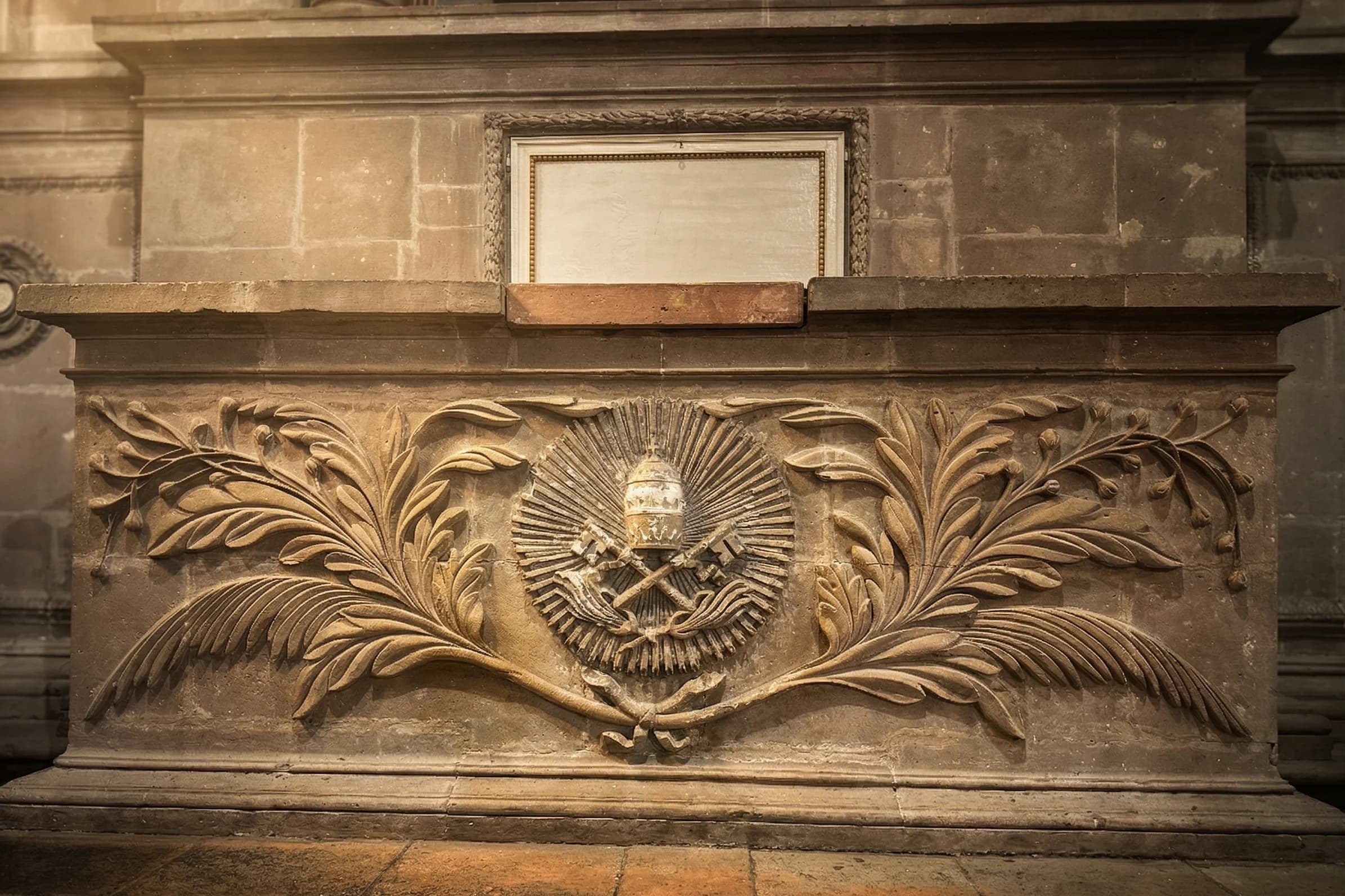
The ensemble is crowned by a dentated entablature with a plain frieze and a closed triangular pediment, elements that evoke the purity of neoclassicism. At the center of the altar front, the pontifical coat of arms is framed by palms symbolizing the victory of martyrdom, reaffirming the communion of the Archdiocese of Durango with the Holy See.

Curatorial text: Museum of the Cathedral Basilica of Durango · Archdiocese of Durango

Historical research: Historian José Alonso Martínez Barrios

Imagen introductoria
Sacred Architecture

Pillars of Faith

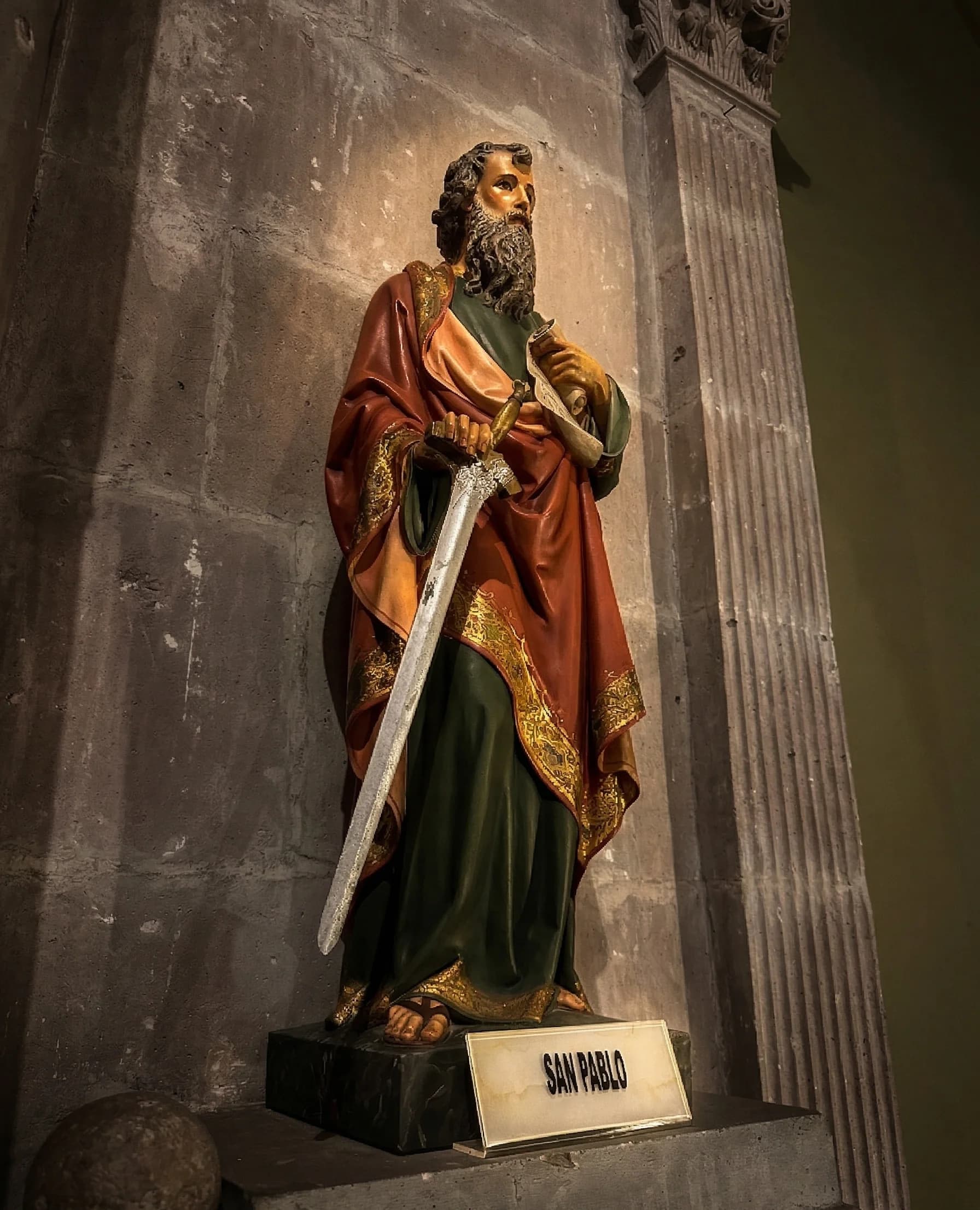
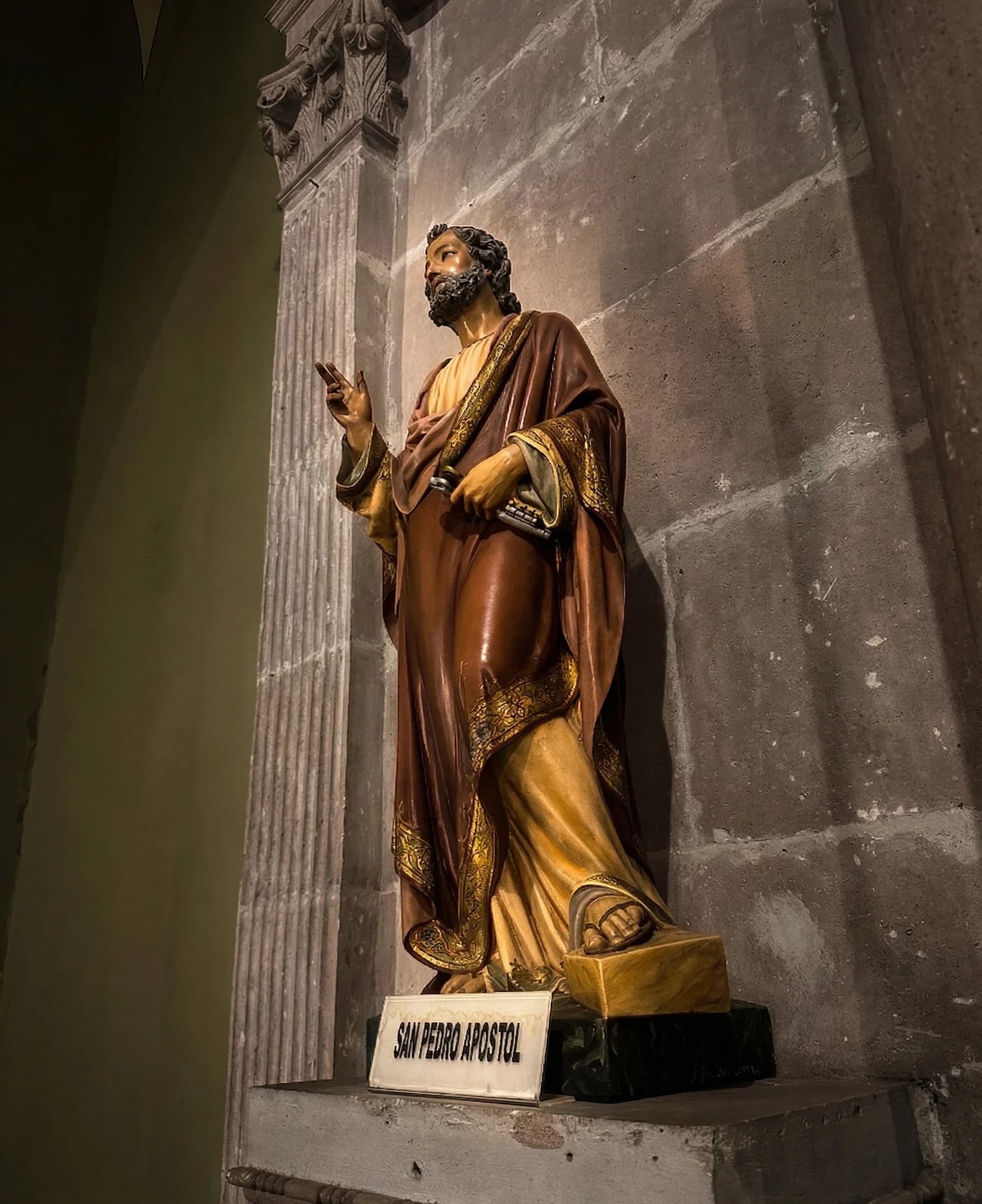
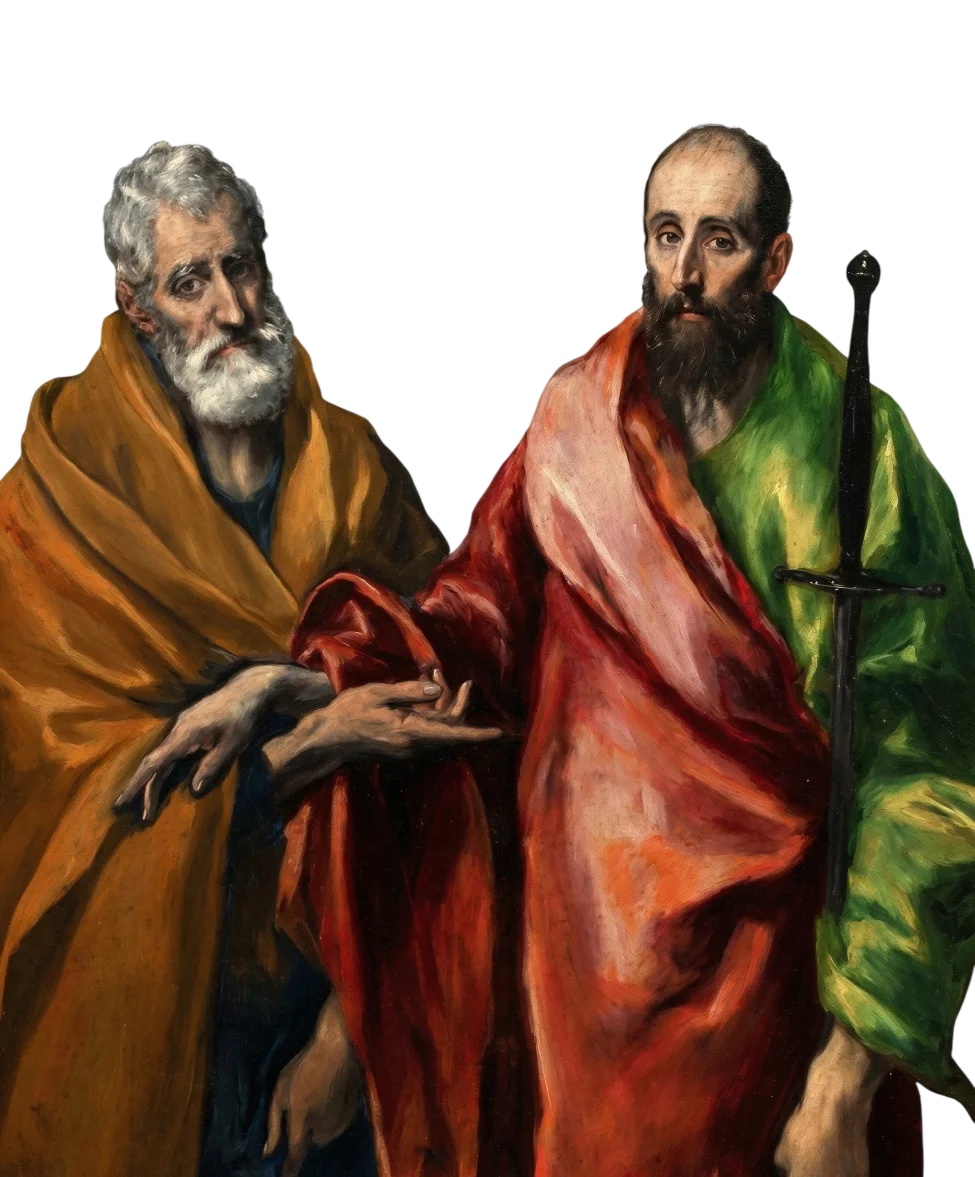
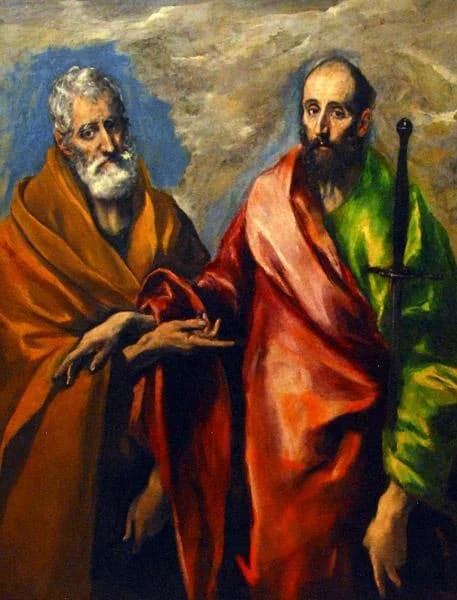
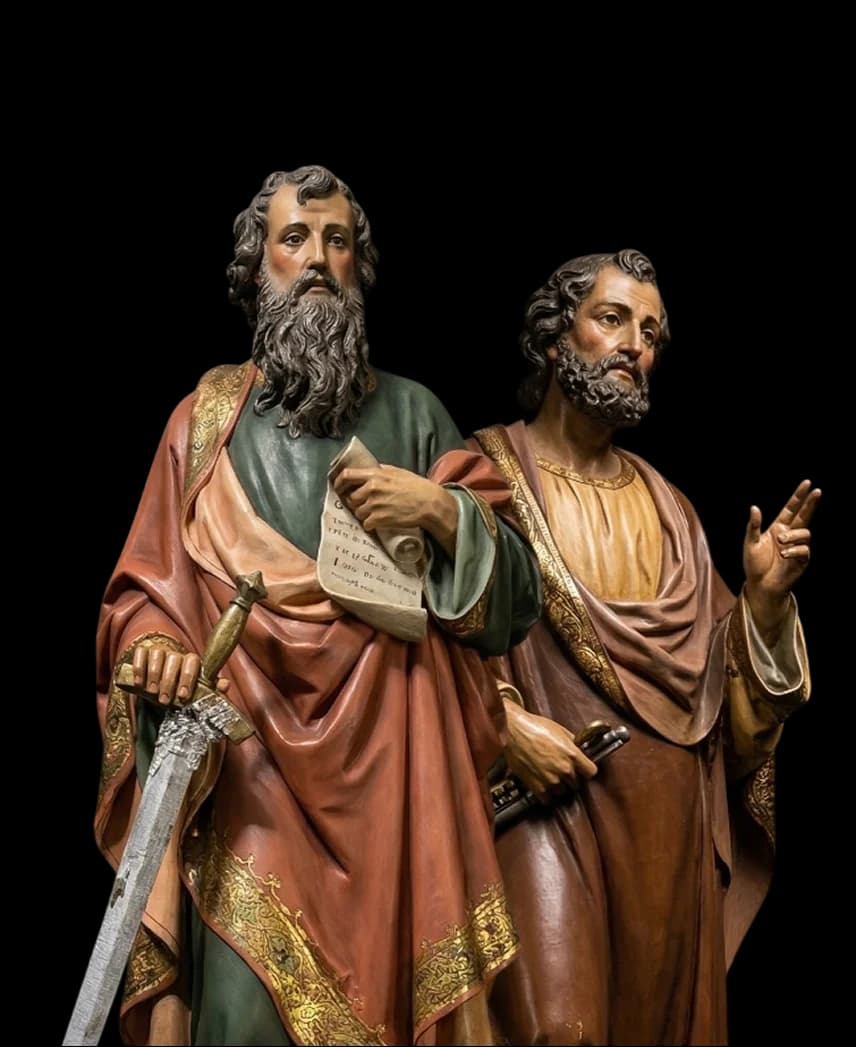
Located in the lateral niches of the altar, Peter and Paul are the figures upon whom the doctrinal structure of the Catholic Church rests. Their presence in the Cathedral of Durango is not coincidental; it represents the universality and unity of the Christian message.

Saint Peter was the fisherman of Galilee called by Jesus to be the "rock." After the Ascension, he assumed the apostolic primacy and transferred the seat to Rome. For his part, Saint Paul of Tarsus, the "Apostle of the Gentiles," personifies the expansion of the Gospel. From being a persecutor of Christians, his conversion on the road to Damascus transformed him into the most prolific theologian.
Relics

Sanctuary of Martyrs

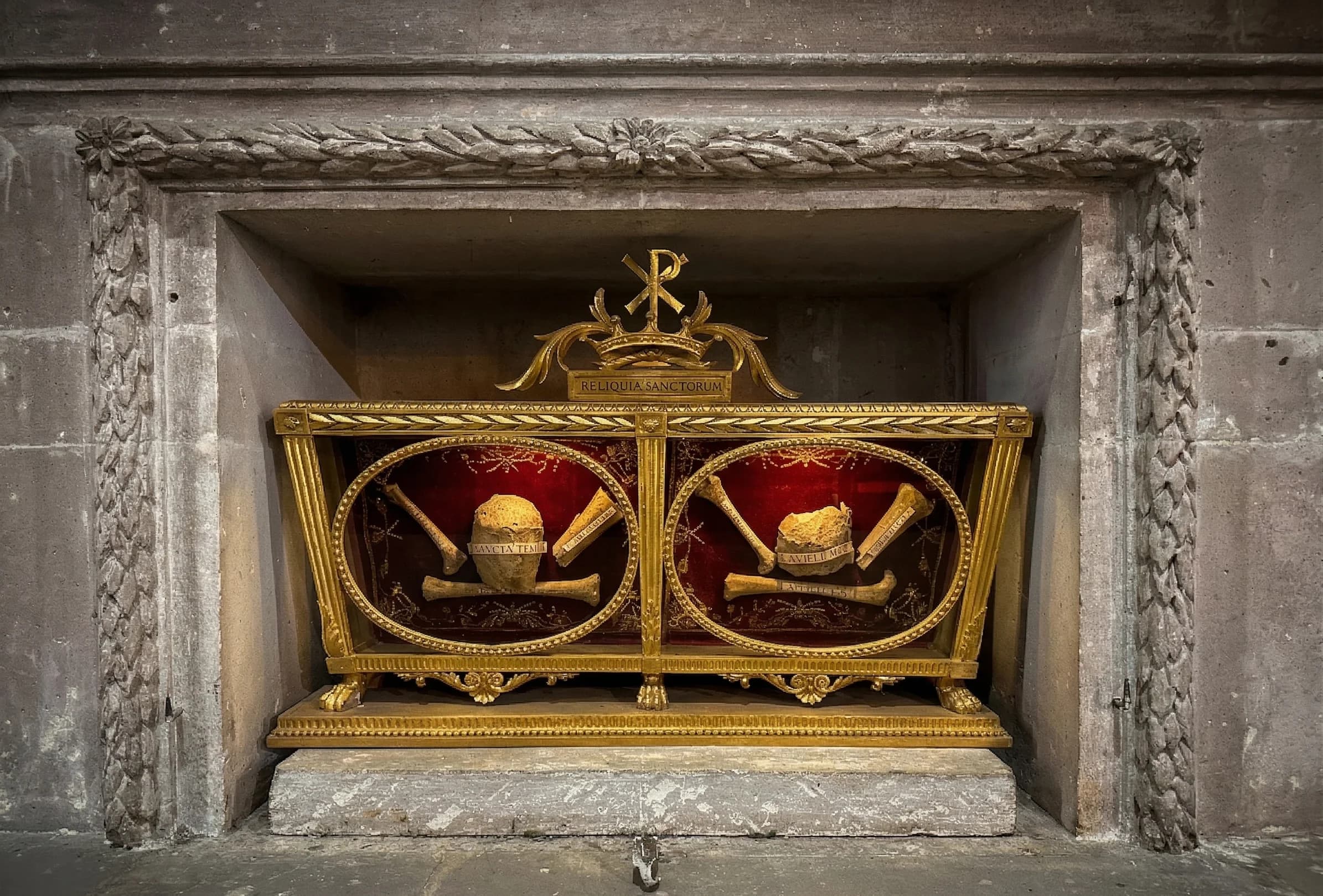
One of the most sacred elements of the altar is the aedicule housing a reliquary. This space is not merely ornamental; it is a tangible bridge with the history of Christianity. The reliquary contains notable remains of saints and martyrs who personify the resistance of faith:

Saint Digna and Saint Fortunatus: Martyrs representing purity and strength.
Constantine the Great: Key figure for freedom of worship in the Roman Empire.
Saint Boniface and Saint Aurelius: Witnesses to the expansion and defense of doctrine.

The presence of these relics transforms the altar into a site of profound veneration.
Devotion and Patronage

SAINTS PETER
AND PAUL

The Testimony of Fire

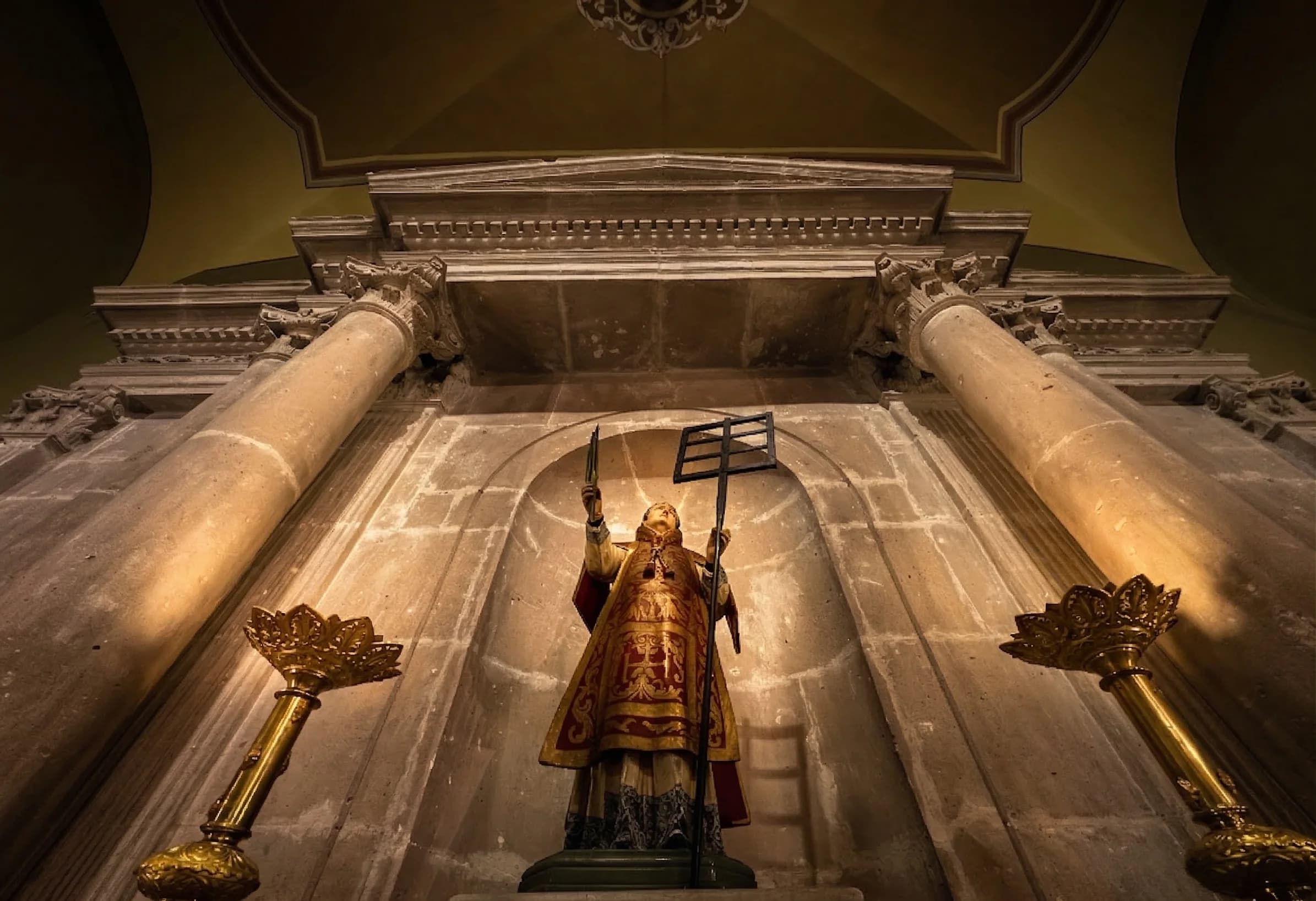
At the center of the composition, specifically on the pedestal, the figure of Saint Lawrence, deacon and martyr, stands out. His central placement between the two great apostles underscores the importance of service and supreme sacrifice within the Church.

Lawrence was one of the seven deacons of Rome under Pope Sixtus II. When the Prefect of Rome demanded that he hand over the treasures of the Church, Lawrence presented the poor, the sick, and the orphans, declaring that they were "the true treasures." His presence in this altar reminds the faithful that true glory is attained through charity and unwavering faithfulness.

SAINTS PETER AND PAUL
SAINTS PETER AND PAUL
Gallery

Saint Peter the Apostle
Saint Paul of Tarsus
Carved Quarry Stone
Technical Virtuosity
Sacred Heart