Estatua
Altar

DIVINEPROVIDENCE

Patron of the Archdiocese of Durango

View in tour
History and Style

An Altar with History

From the baroque altarpiece to the quarry stone altar

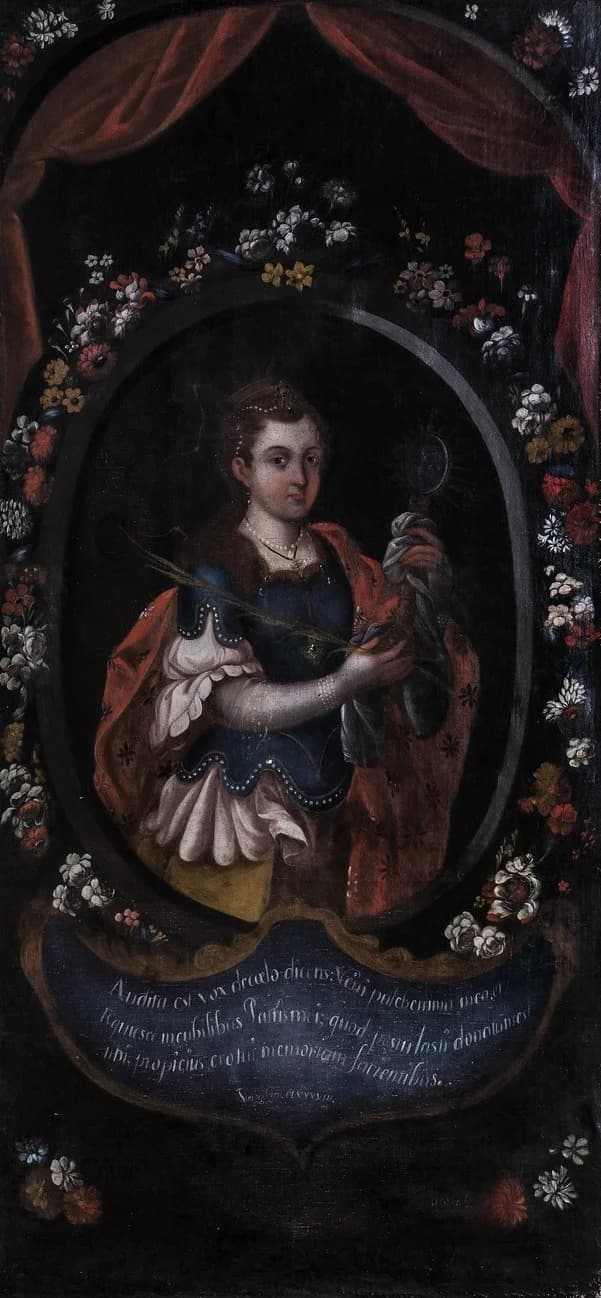
In 1822, this apse was described as containing a carved wooden altarpiece, painted and gilded, decorated at the center with a painting of the Holy Trinity. On the sides were the four Doctors of the Latin Church and a sculpture of Saint George slaying the dragon. The ensemble had seventy-five reliquaries, an ivory cross, nine vellum paintings, and a relic of supreme relevance: the Santo Lignum Crucis, a splinter of the Holy Cross, housed in a silver monstrance. Three silver filigree reliquaries of Saint Anne, Saint Anthony, and Saint Ursula completed the ensemble.

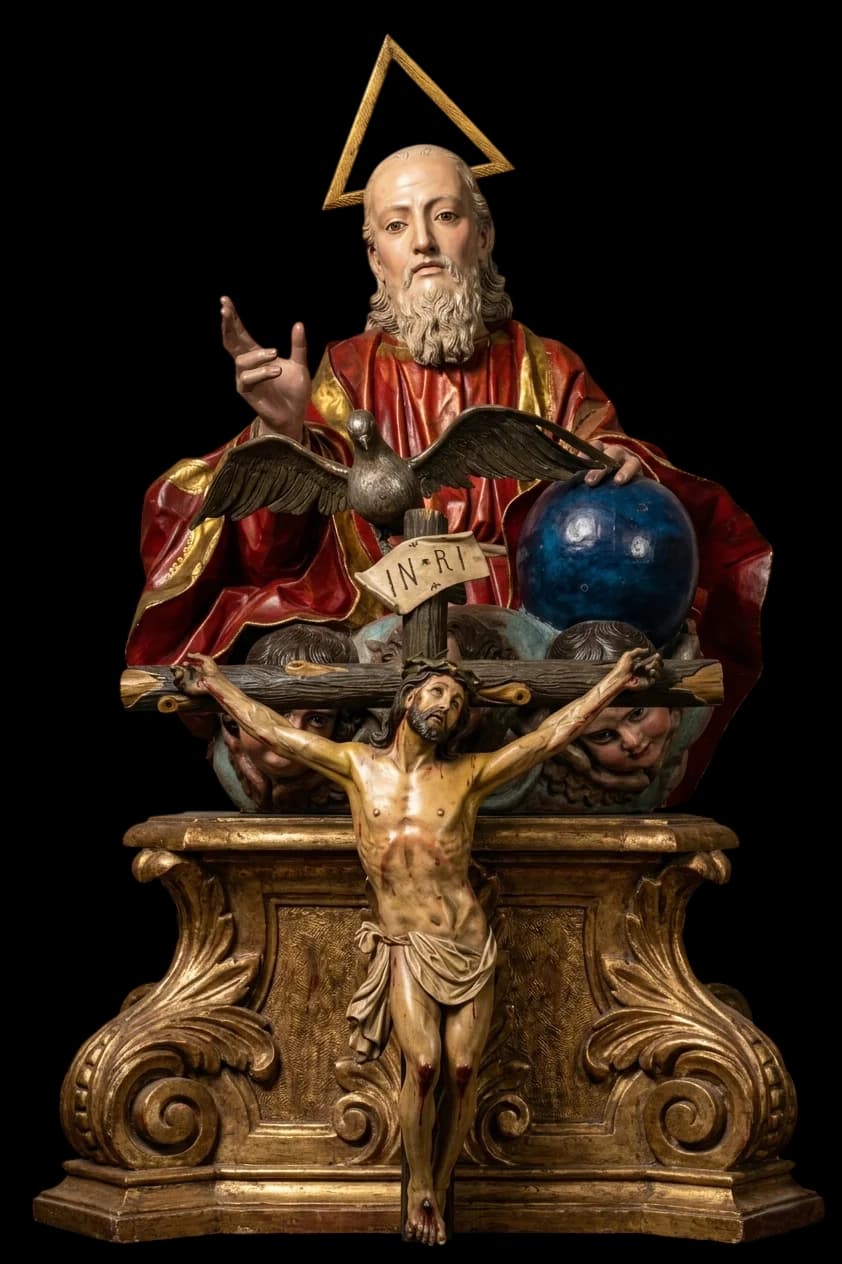
The Image of Divine Providence

From a theological and dogmatic perspective, devotion to Divine Providence represents the disposition and intervention of God over all things in creation. The central image, a polychromed and gilded wooden piece, personifies this triad: the watchful gaze, the providing hand, and the sustaining heart. This piece was bequeathed to the Cathedral of Durango by the Most Illustrious Bishop Esteban Lorenzo de Tristán.

Curatorial text: Museum of the Cathedral Basilica of Durango · Archdiocese of Durango

Historical research: Historian José Alonso Martínez Barrios
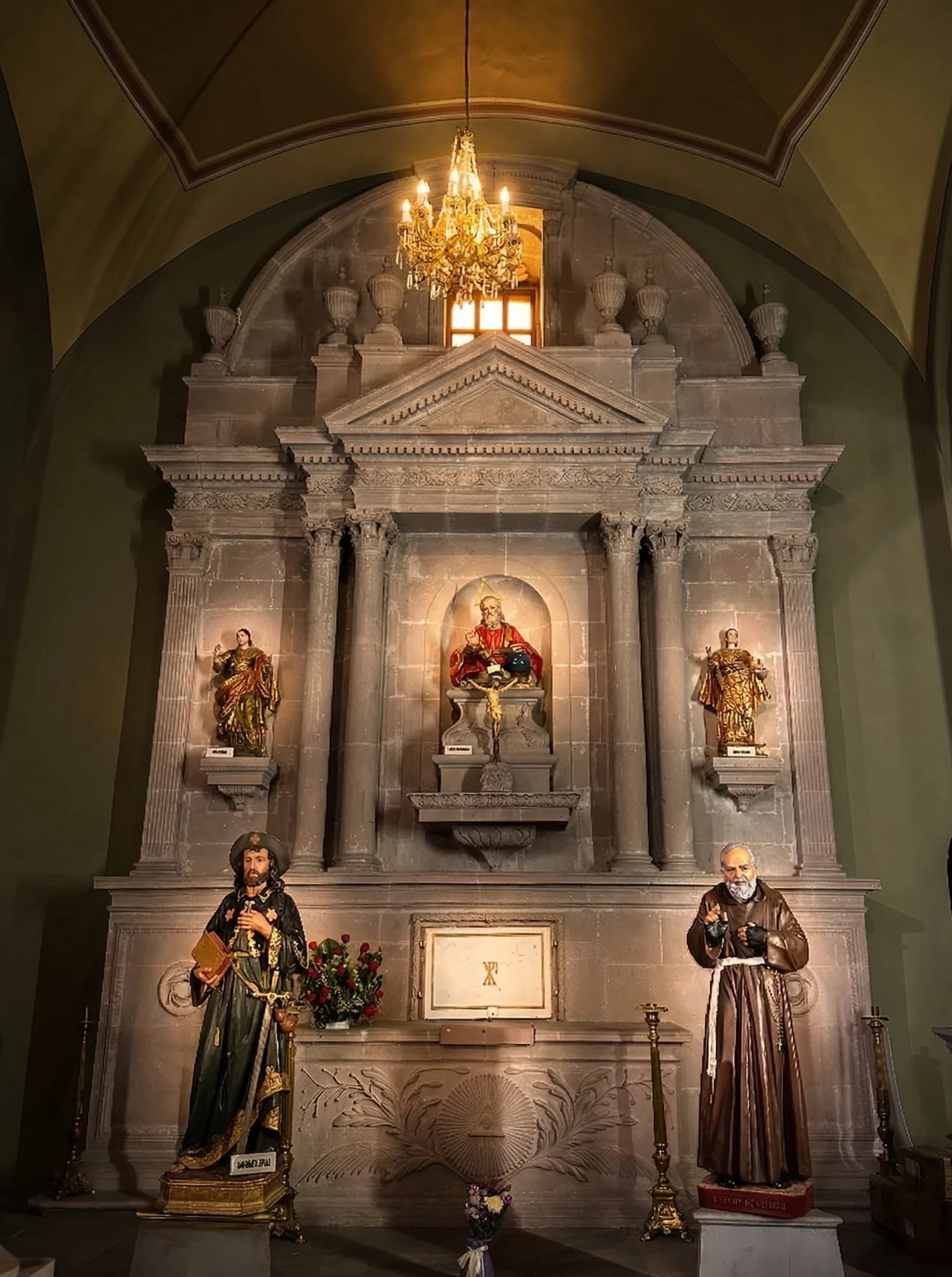
Imagen introductoria
Sacred Architecture

Stone Architecture

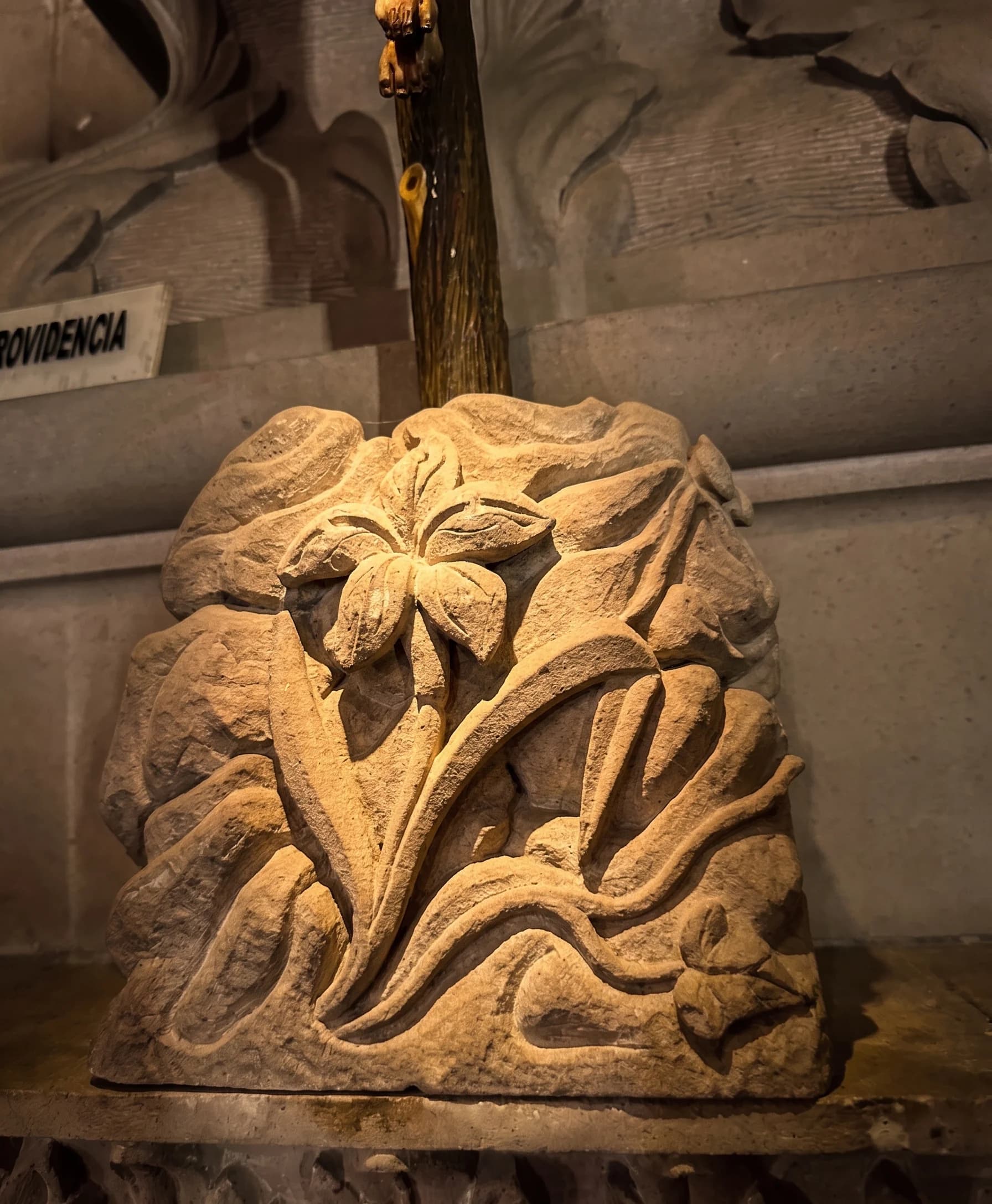
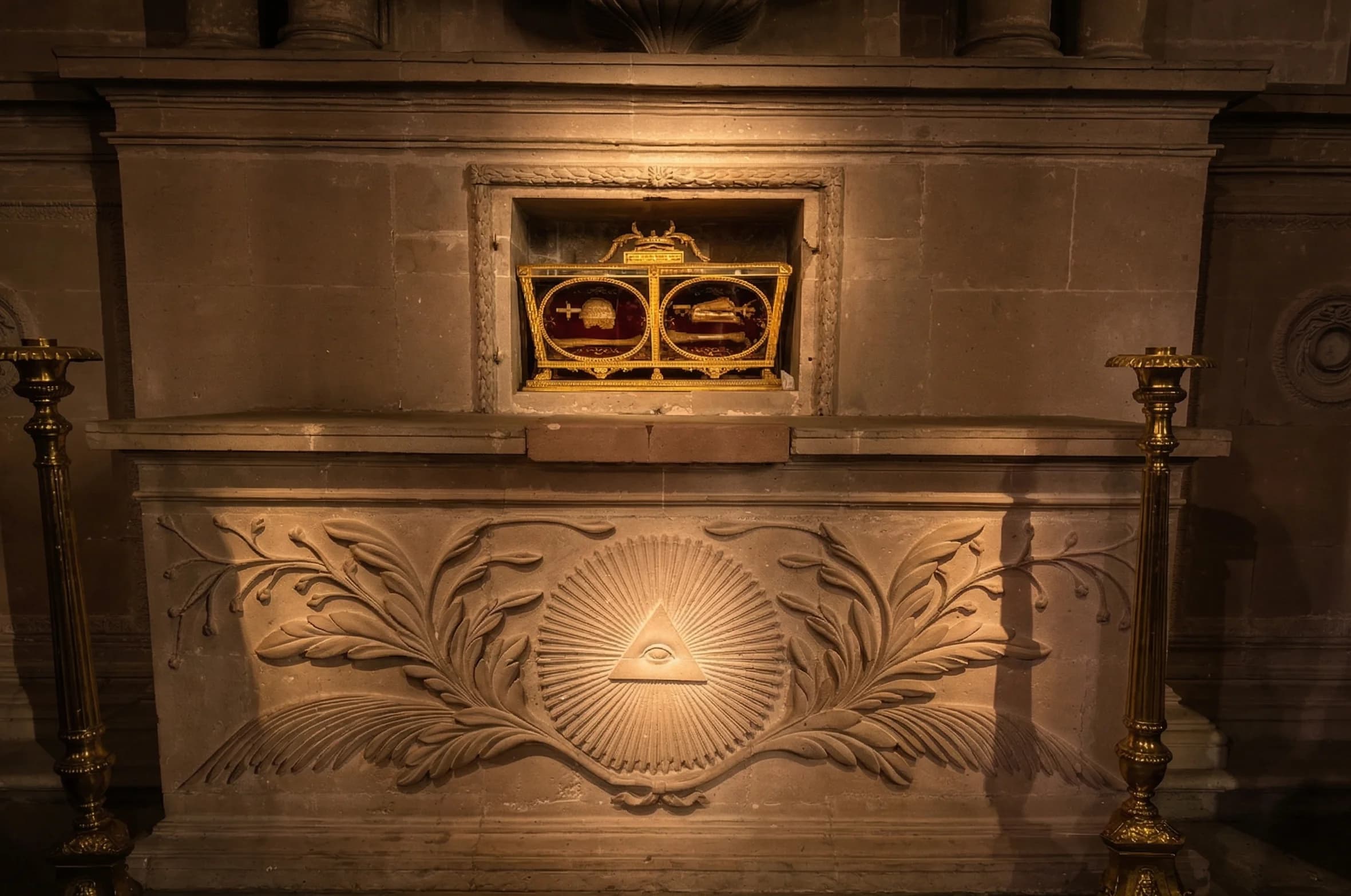
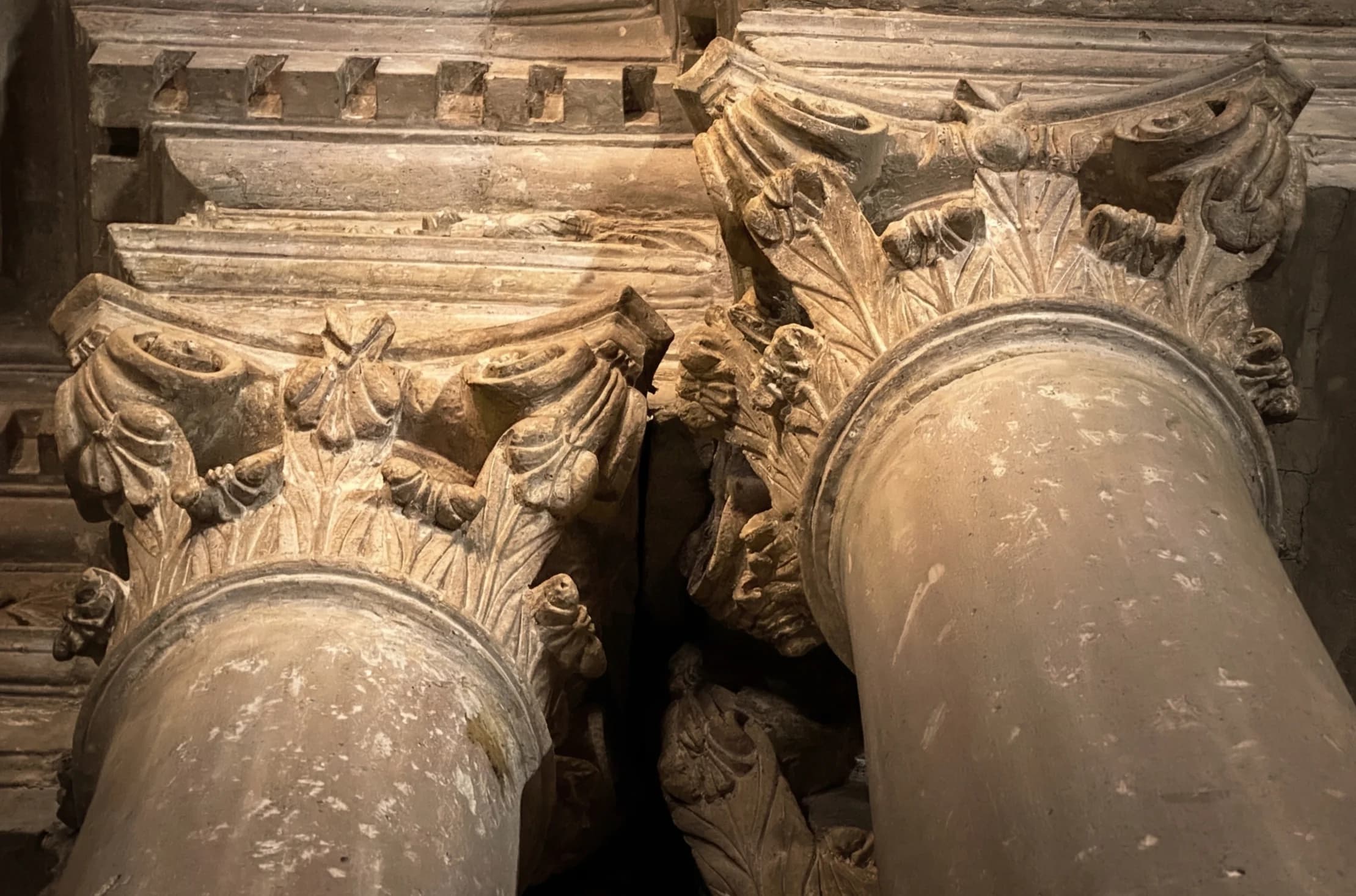
The current quarry stone altar is a piece of classical and elegant arrangement that achieves a notable technical sophistication. The sides are defined by fluted pilasters of composite type. In the central bay, the design becomes bolder, forming a portico of paired and free-standing columns, also of composite order, that give the altar a three-dimensional depth that invites contemplation.

Upon these columns rests an entablature supporting a closed triangular pediment, a frame of authority that directs the gaze upward. The architectural ensemble plays with the clerestory, where the window is decorated with a scallop shell, a liturgical symbol of baptism, allowing natural light to interact with the gilded surface and the sobriety of the stone. Flanking the ensemble are urns emitting stone flames, symbolizing perpetual prayer and the fervor that should emanate from believers.
Relics

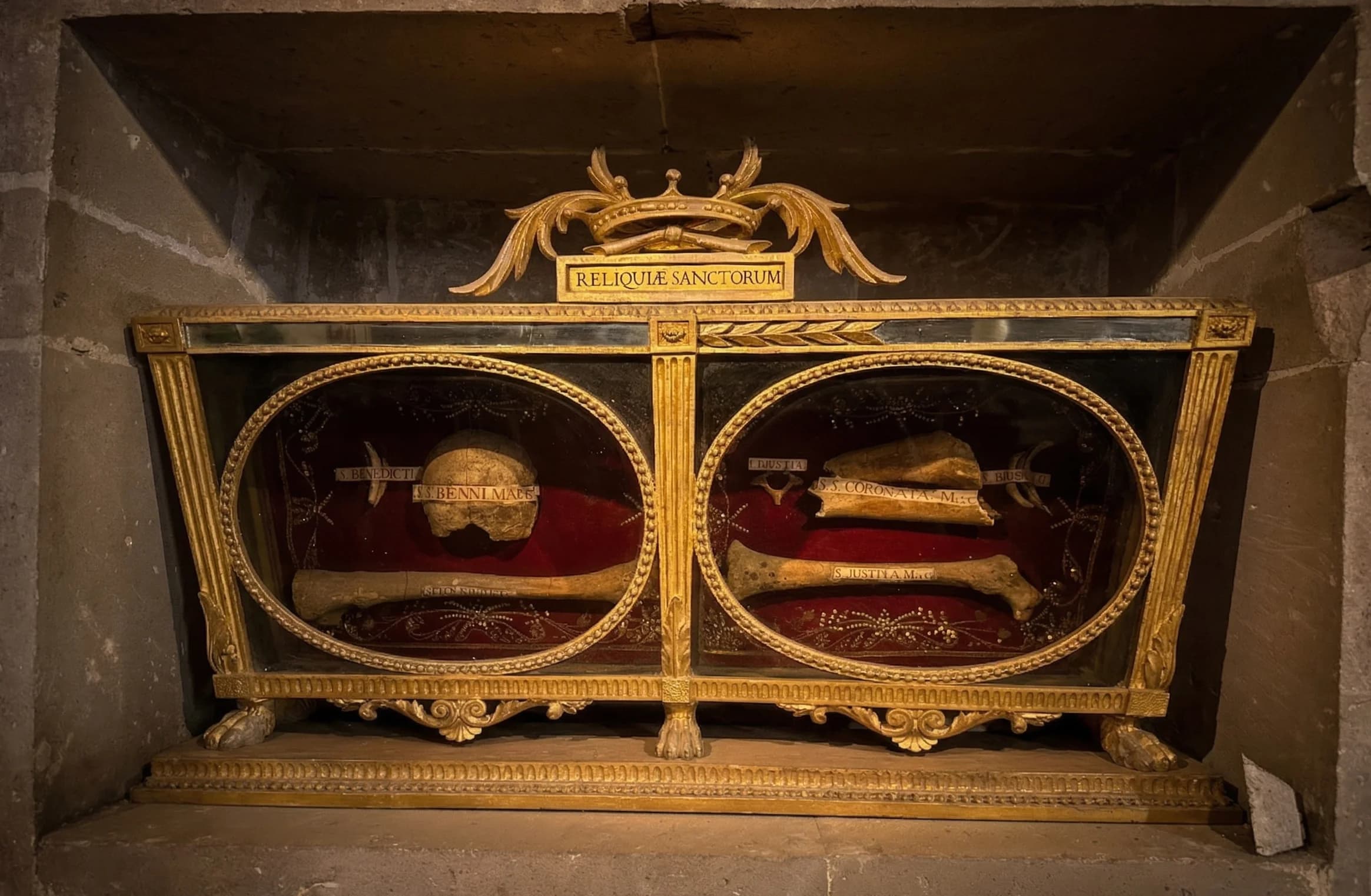
Holy Martyrs in the Aedicule

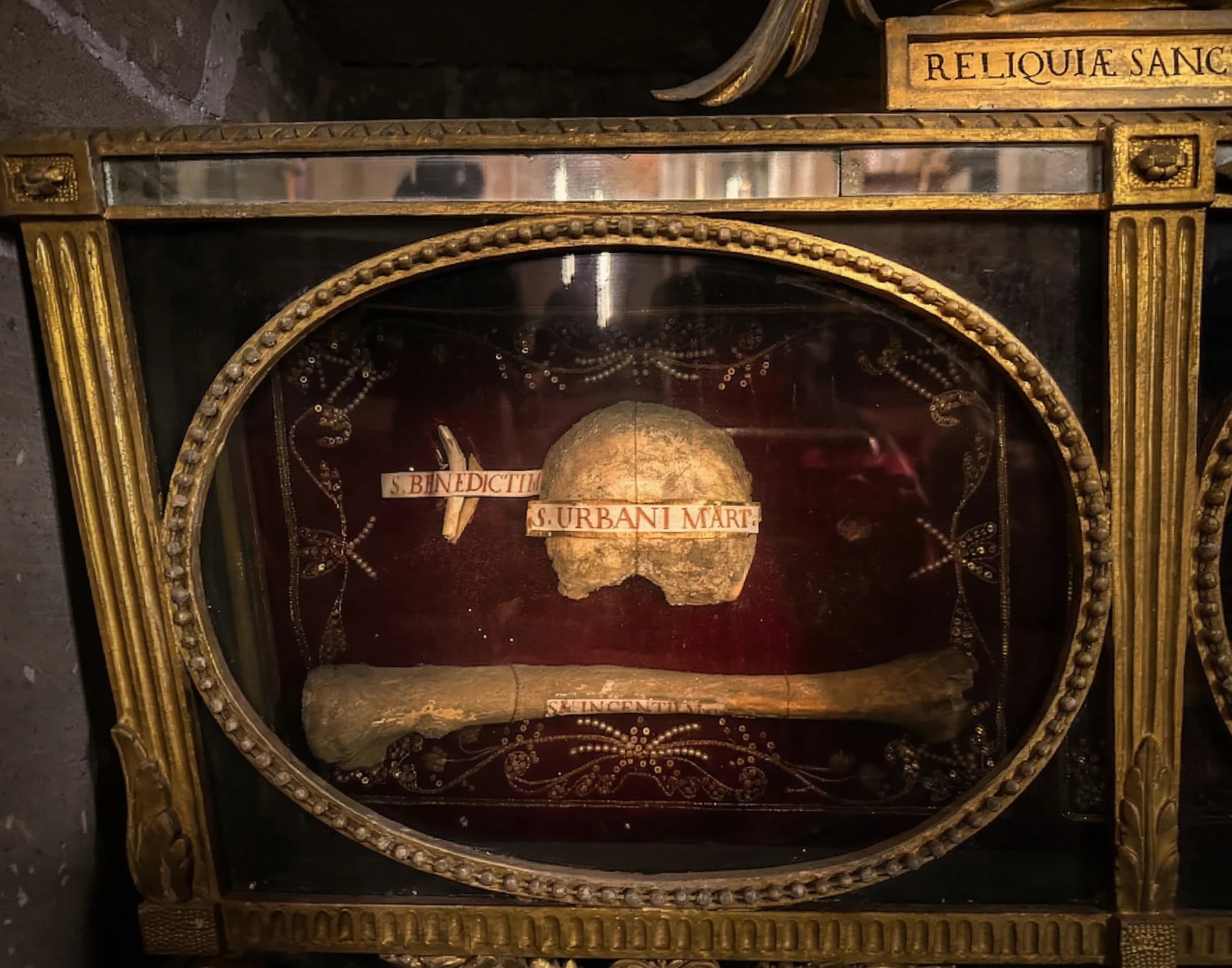
In the altar's aedicule a cultic element of profound importance is housed: a reliquary containing remains of various saints. The presence of these relics underscores that divine guidance manifests across the centuries through men and women who, from martyrdom or temporal power, served God's plan.

Saint Fortunatus

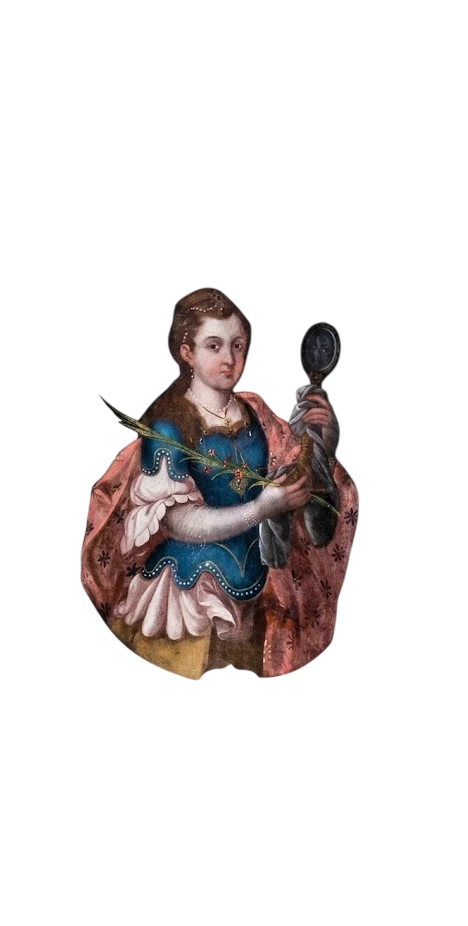
Saint Coronata

Saint Justin Martyr

Saint Dignus

Saint Boniface

Saint Urban Martyr

Saint Innocent

Saint Benedict
Devotion and Patronage

DIVINE PROVIDENCE
The Secondary Patronesses

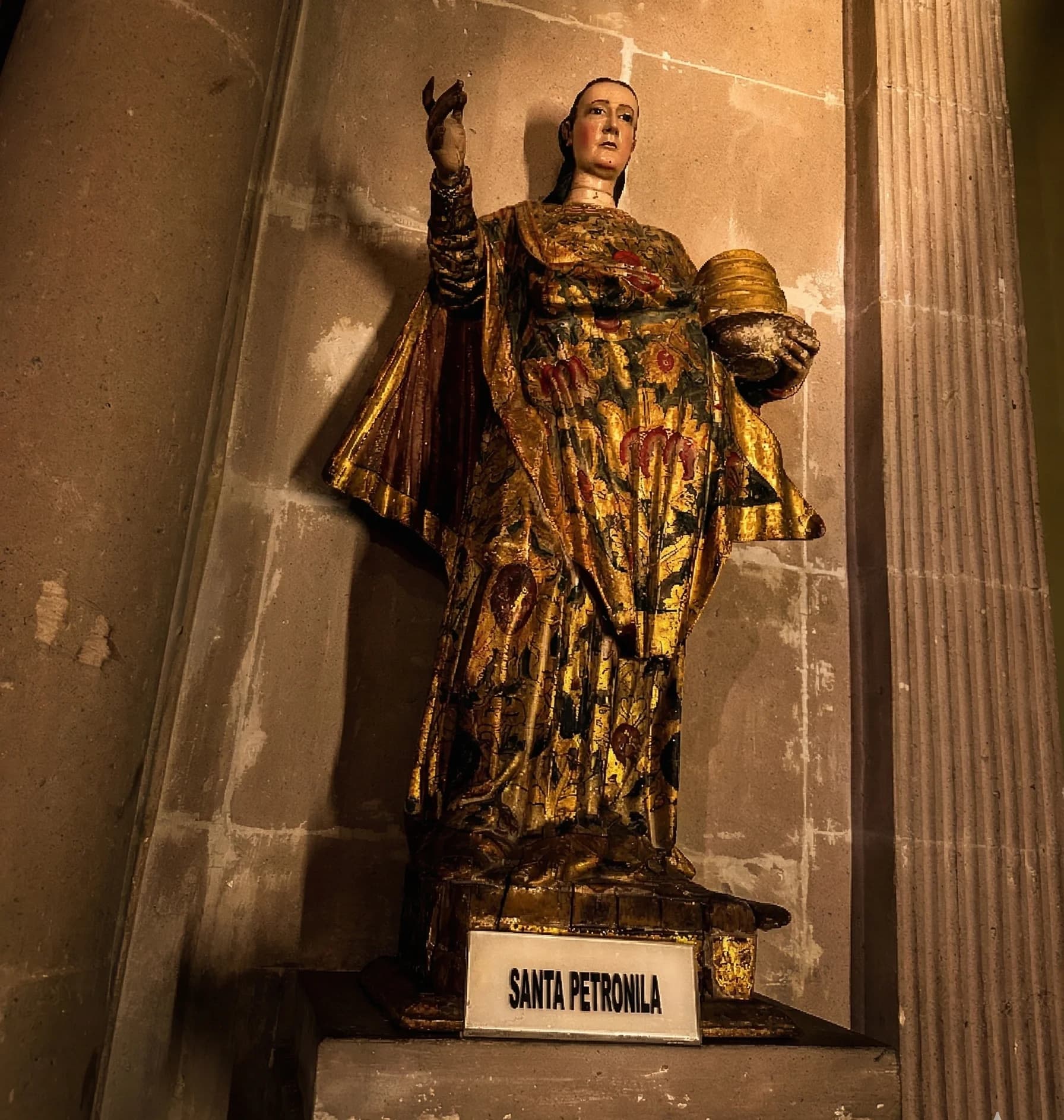
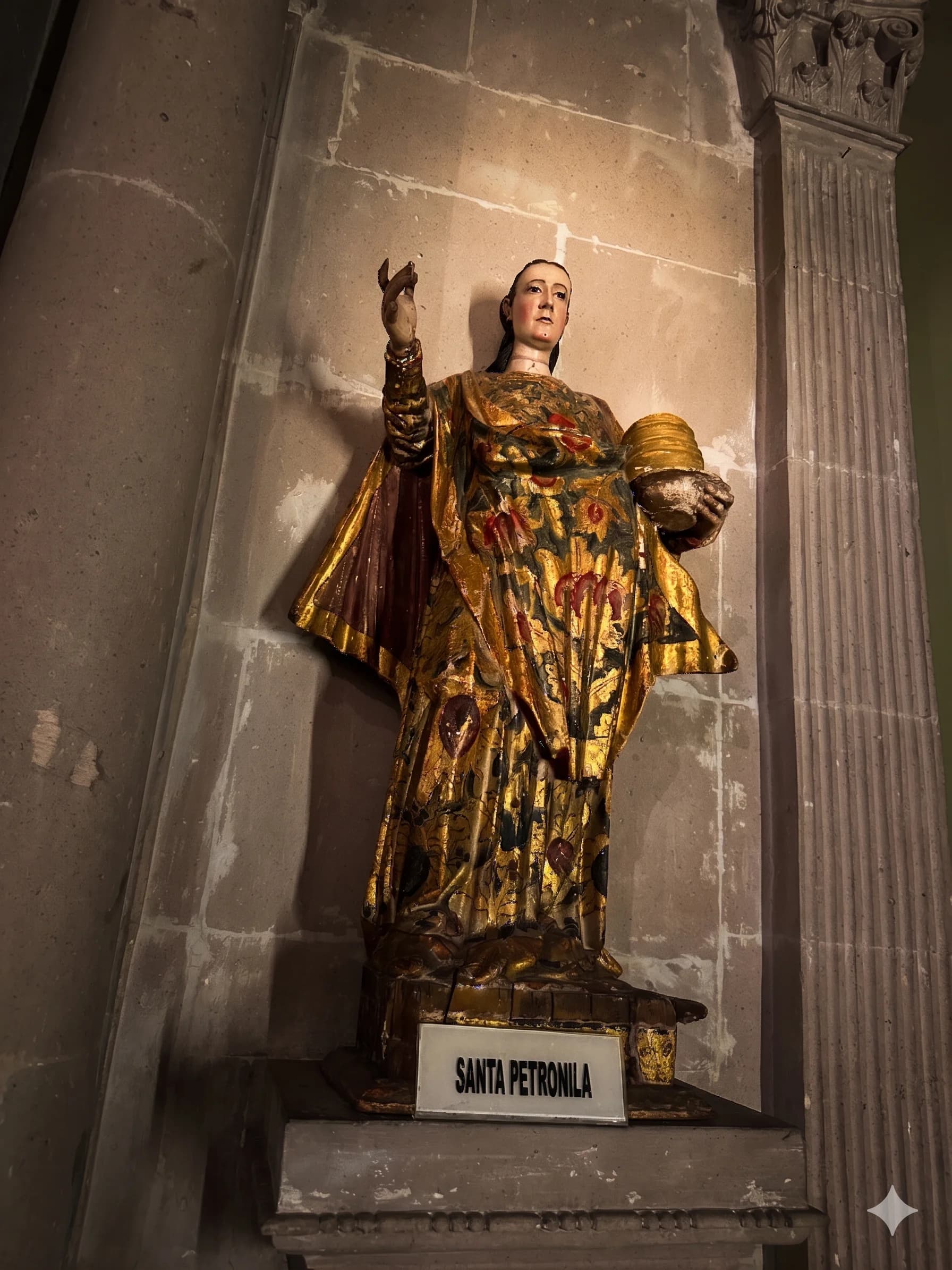
Two female figures, secondary patronesses of the Archdiocese, occupy the lateral aedicules of the altar. They are polychromed and gilded wooden pieces whose craftsmanship is attributed to the late 17th century.

Saint Barbara (Left Aedicule): A 3rd-century martyr, locked in a tower by her pagan father to prevent contact with Christianity. Upon converting and professing her faith, she was martyrized. Her presence symbolizes strength in the face of adversity and divine protection in moments of tempest.

Saint Petronilla (Right Aedicule): Identified by tradition as the spiritual daughter of Saint Peter. She is associated with healing and total surrender to God after rejecting marriage proposals to maintain her vow of chastity.

DIVINE PROVIDENCE

DIVINE PROVIDENCE

Gallery

Divine Providence
Saint Barbara
Saint Petronilla
Composite Columns
Triangular Pediment
Santo Lignum Crucis
Flaming Urns
Sculptural Detail